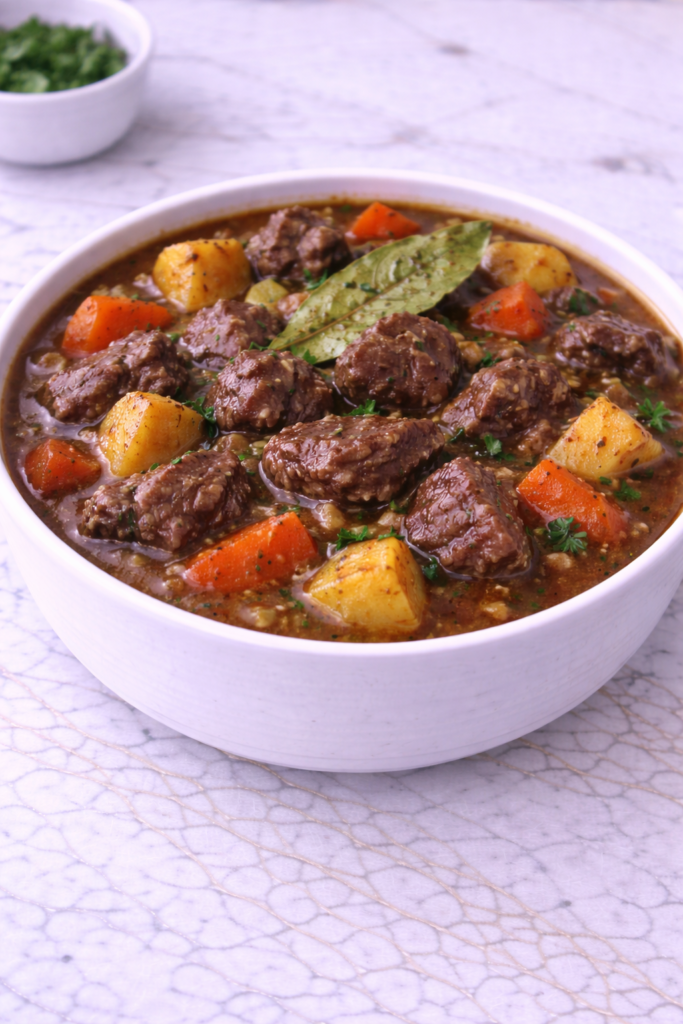
I’ve got to tell you, there’s something magical about a pot of Irish beef stew with Guinness simmering on the stove. The rich aroma of beef, vegetables, and that distinctive stout beer creates an irresistible comfort food experience that’s perfect for cold evenings.
You might think adding beer to stew sounds strange, but trust me, it transforms ordinary beef stew into something extraordinary.
The Guinness adds depth without tasting “boozy,” creating a velvety sauce that coats each bite. Ready to discover how this humble dish becomes a show-stopper?

Why You’ll Love this Irish Beef Stew with Guinness
When you’re craving comfort food that warms your soul, this Irish Beef Stew with Guinness delivers in every way possible. The rich, savory broth infused with Guinness creates a depth of flavor you simply can’t achieve with regular beef broth alone.
I love how the tender chunks of beef practically melt in your mouth after simmering for hours. The hearty vegetables soak up all that amazing flavor, making each bite better than the last.
And can we talk about that gorgeous sauce? Slightly thickened with flour, it’s perfect for sopping up with crusty bread. Who needs a trip to Dublin when this cozy stew brings Ireland to your kitchen?
What Ingredients are in Irish Beef Stew with Guinness?
To make this comforting Irish Beef Stew, you’ll need a handful of simple ingredients that work together to create that deep, rich flavor that makes this dish so special.
- 2 tablespoons olive oil
- 2 pounds beef chuck, cut into cubes
- 1 onion, chopped
- 3 carrots, sliced
- 3 potatoes, cubed
- 2 cloves garlic, minced
- 2 tablespoons flour
- 14 ounces Guinness stout
- 2 cups beef broth
- 2 bay leaves
- 1 teaspoon thyme
- Salt and pepper to taste
When shopping for this recipe, quality matters—especially with the beef, as a good marbling in the chuck will break down during cooking to create that melt-in-your-mouth texture we all dream about in a proper stew.
How to Make this Irish Beef Stew with Guinness
Step 1: Brown the Beef
Heat 2 tablespoons of olive oil in a large pot over medium-high heat, then add the 2 pounds of cubed beef chuck.
Brown the meat in batches, giving each piece enough room to develop that gorgeous caramelization. This step is essential—those browned bits are pure flavor magic.
Step 2: Add the Vegetables
Add the chopped onion to the pot and sauté until translucent.
Then add 3 sliced carrots, 3 cubed potatoes, and 2 minced garlic cloves. Cook for about 5 minutes, letting the vegetables pick up all those meaty flavors from the bottom of the pot.
Step 3: Create the Base
Sprinkle 2 tablespoons of flour over the meat and vegetables, stirring continuously to coat everything evenly.
The flour will help thicken our stew as it cooks, giving it that perfect hearty consistency we’re looking for.
Step 4: Pour in the Liquids
Pour in the 14 ounces of Guinness stout, using it to deglaze the pot—scrape up all those beautiful browned bits from the bottom.
Then add 2 cups of beef broth, stirring to combine everything.
Step 5: Season and Simmer
Add 2 bay leaves, 1 teaspoon of thyme, and season with salt and pepper to taste.
Bring the stew to a gentle boil, then reduce heat to low, cover, and let it simmer for about 2 hours. The long cooking time allows the beef to become wonderfully tender.
Step 6: Finish and Serve
After two hours of simmering, remove the bay leaves and adjust the seasoning if needed.
The stew should be thick and rich, with meat that falls apart at the touch of a fork. Let it rest for a few minutes before serving piping hot.
Step 7: Pro Tip for Extra Flavor
For an even more flavorful stew, make sure to brown the beef really well at the beginning—don’t rush this step.
And when you add the Guinness, take your time deglazing the pot, ensuring you capture every bit of flavor from the bottom.
For best results, consider using a premium Dutch oven for even heat distribution and superior flavor development in your Irish stew.
What to Serve with Irish Beef Stew with Guinness
This hearty stew practically begs for a slice of warm Irish soda bread to soak up that rich, Guinness-infused gravy.
A simple green salad with a light vinaigrette makes the perfect counterpoint to the stew’s richness—think peppery arugula or crisp romaine with a squeeze of lemon.
For drinks, you can’t go wrong with the obvious choice: a cold pint of Guinness to echo the flavors in your bowl.
If you’re not a beer person, a robust red wine like Cabernet Sauvignon stands up beautifully to the beef.
And for a truly traditional Irish dinner experience, serve some colcannon (mashed potatoes with cabbage or kale) on the side.
The creamy texture is divine when it mingles with the stew’s savory sauce.
Irish Beef Stew with Guinness Substitutions and Variations
• Garnish ideas: Fresh thyme leaves, a dollop of sour cream, or crispy fried shallots take this rustic dish to dinner-party worthy status.
Leftovers and Storage for this Irish Beef Stew with Guinness
This hearty stew actually improves with time, developing deeper flavors overnight. Store leftovers in airtight containers in the refrigerator for up to 4 days—perfect for meal prep or busy weeknights.
To freeze, cool completely first (crucial step!), then portion into freezer-safe containers, leaving a bit of headspace. Frozen stew keeps well for 3 months.
When reheating, add a splash of beef broth if the stew seems too thick. Warm gently on the stovetop over medium-low heat, stirring occasionally to prevent scorching. For microwave reheating, use medium power and stir halfway through.
The potatoes may soften slightly after storage, but this just adds to the comforting, rustic nature of the dish. Trust me, day-two stew is something to look forward to!
Final Thoughts
This Irish Beef Stew with Guinness represents comfort food at its finest—tender chunks of beef chuck transformed by slow simmering with the distinctive maltiness of stout beer.
The humble combination of carrots, potatoes, and aromatic herbs creates something truly magical when given time to meld together.
It’s the perfect weekend project when you crave something substantial yet unfussy, ideal for Sunday family dinners or when entertaining guests on chilly evenings.
While it requires patience, the reward is a deeply satisfying meal that connects us to generations of Irish cooking tradition—simple ingredients transformed into something extraordinary through time and care.