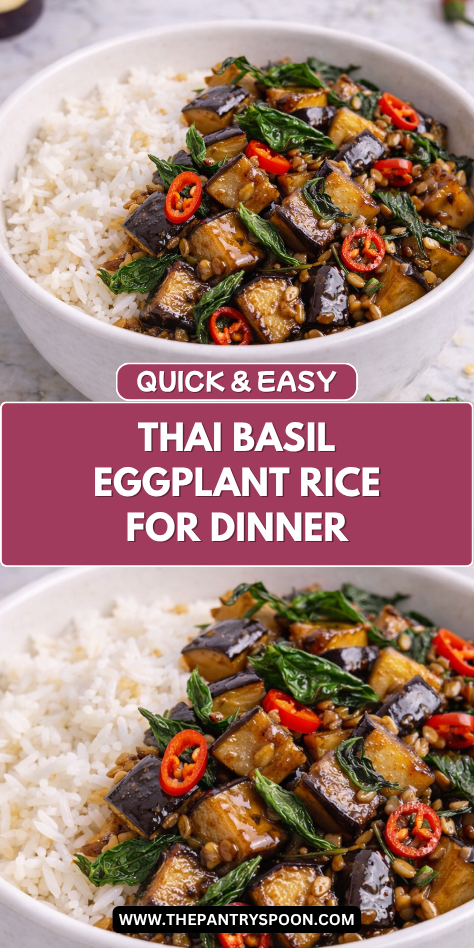
Struggling to make eggplant that’s not mushy or bland? I used to avoid cooking it until I learned how Thai basil and the right seasoning completely transform it.
I’ll walk you through how to cook eggplant until it’s tender and silky, then toss it with jasmine rice and fresh basil for bold, aromatic flavor.
It’s got a little heat and sweetness that makes plain rice actually exciting. You can make it as spicy or mild as you want, and it comes together faster than ordering takeout.
Why You’ll Love This Recipe
This Thai basil eggplant rice is all about bold, balanced flavor. The savory sauce, tender eggplant, and fresh basil create a combination that feels rich and satisfying without being heavy. It’s a simple dish with a lot of depth.
It’s also quick and easy to prepare, making it perfect for busy weeknights. With just a few steps and accessible ingredients, you can create a flavorful meal in a short amount of time. It’s a reliable recipe you can turn to again and again.
Another reason to love this recipe is its versatility. You can adjust the spice level, add other vegetables, or serve it in different ways. This Thai basil eggplant rice fits easily into a variety of meals and preferences.
Serves: 4 people
This recipe makes four servings, perfect for a family meal or leftovers. The portions are satisfying and can be adjusted depending on your needs.
Ingredients You’ll Need
For the Rice:
- 2 cups cooked jasmine rice
For the Eggplant Stir-Fry:
- 2 cups eggplant, cubed
- 2 tablespoons oil
- 1 small onion, sliced
- 2 cloves garlic, minced
- 1 red chili (optional), sliced
- 1/4 cup fresh Thai basil leaves
For the Sauce:
- 2 tablespoons soy sauce or tamari
- 1 tablespoon oyster sauce (or vegetarian alternative)
- 1 teaspoon sugar
- 1 tablespoon water
Pro Tips
Cut the eggplant into even-sized pieces for consistent cooking. This helps everything cook evenly. It improves the texture.
Cook the eggplant until soft and slightly golden. This helps it absorb the sauce better. It enhances flavor.
Use fresh Thai basil for the best aroma and taste. It adds a unique flavor. It makes a difference.
Do not overcrowd the pan when cooking the eggplant. This helps it cook properly. It improves the result.
Adjust the sauce to your taste by adding more soy sauce or sugar. This keeps the recipe flexible. It balances the flavors.
Serve the dish immediately for the best texture and flavor. This keeps everything fresh and vibrant.
Tools You’ll Need
- Large skillet or wok
- Knife
- Cutting board
- Measuring cups
- Measuring spoons
- Spoon or spatula
Substitutions and Variations
You can use brown rice instead of jasmine rice for a different texture. This adds a slightly nutty flavor. It’s a good option.
If you prefer a spicier dish, add more chili or a dash of chili sauce. This increases the heat. Adjust to your preference.
For added protein, you can include tofu or tempeh. This makes the dish more filling. It adds variety.
You can also add vegetables like bell peppers or green beans. This adds color and texture. It enhances the dish.
If you want a vegan version, use a vegetarian oyster sauce alternative. This keeps the dish plant-based. It’s easy to adjust.
Make Ahead Tips
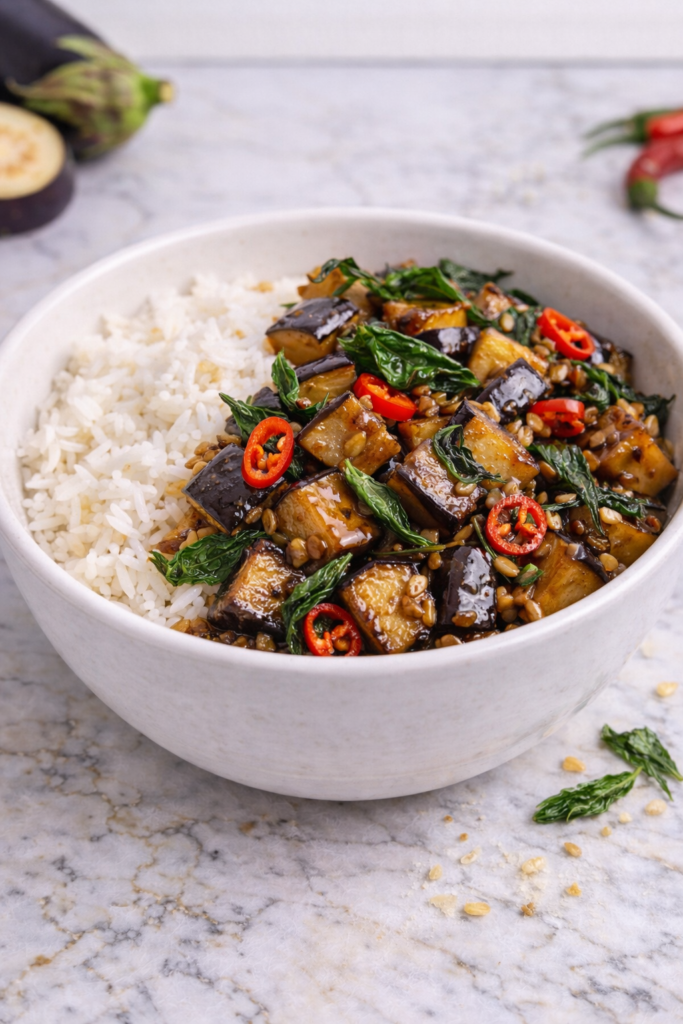
This Thai basil eggplant rice is a great option for preparing ahead, especially when you want a flavorful meal ready during the week. You can cook the rice in advance and store it in the refrigerator for up to 3 days. This helps save time when assembling the dish.
You can also chop the vegetables and prepare the sauce ahead of time. Store them separately in airtight containers to keep everything fresh. This makes cooking quicker and more efficient.
For best results, cook the eggplant fresh when you’re ready to serve. This helps maintain its texture and flavor. It keeps the dish vibrant and satisfying.
Instructions
Step 1: Prepare the Ingredients
Start by cooking the jasmine rice if it’s not already prepared. Set it aside and keep it warm. This forms the base of the dish.
Step 2: Mix the Sauce
In a small bowl, combine the soy sauce, oyster sauce, sugar, and water. Stir until the sugar dissolves. This creates the flavorful sauce.
Step 3: Heat the Oil
In a large skillet or wok, heat the oil over medium heat. Allow it to warm before adding the ingredients. This helps with even cooking.
Step 4: Cook the Eggplant
Add the cubed eggplant to the skillet and cook until soft and slightly golden. Stir occasionally to ensure even cooking. This helps it absorb the sauce.
Step 5: Add Onion and Garlic
Add the sliced onion and minced garlic to the skillet. Cook until fragrant and slightly softened. This builds the base flavor.
Step 6: Add Chili (Optional)
If using chili, add it at this stage and stir well. This adds heat and depth. Adjust based on your preference.
Step 7: Pour in the Sauce
Pour the prepared sauce over the eggplant mixture. Stir to coat everything evenly. This brings the flavors together.
Step 8: Simmer Briefly
Allow the mixture to cook for a few minutes so the sauce thickens slightly. This helps the eggplant absorb the flavor. It enhances the dish.
Step 9: Add Basil
Turn off the heat and stir in the fresh Thai basil leaves. Let them wilt slightly in the heat. This adds aroma and freshness.
Step 10: Serve with Rice
Spoon the eggplant mixture over the cooked rice and serve immediately. Enjoy the balance of flavors and textures. It’s ready to enjoy.
Serving Suggestions
This dish is perfect on its own as a complete meal. The combination of rice and eggplant makes it filling and satisfying. It works well for everyday dinners.
It also pairs nicely with a simple side like cucumber salad or steamed vegetables. The freshness balances the savory flavors. It adds variety.
For extra flavor, you can top it with a squeeze of lime or a drizzle of chili oil. This adds brightness and heat. It enhances the experience.
Leftovers and Storage
Store any leftover Thai basil eggplant rice in an airtight container in the refrigerator for up to 3 days. Reheat in a skillet or microwave until warmed through. Stir gently while reheating.
If the rice becomes dry, add a small splash of water before reheating. This helps restore moisture. It improves texture.
For best results, store the rice and eggplant mixture separately if possible. This helps maintain their individual textures. It keeps the dish fresh.
Nutrition and Benefits
- Eggplant provides fiber and a soft texture that absorbs flavor well. It contributes to a satisfying meal.
- Rice offers energy and serves as a balanced base for the dish. It makes the meal filling.
- Fresh basil adds aroma and a unique flavor profile. It enhances the overall experience.
- Using simple ingredients allows for flexibility and easy customization. It keeps the recipe approachable.
- This dish offers a balanced combination of flavor and texture, making it suitable for everyday meals.
Recipe FAQ
Can I use regular basil instead of Thai basil?
Yes, regular basil can be used, though the flavor will be slightly different. It still works well in the dish.
How do I keep eggplant from becoming too soft?
Cook it until just tender and avoid overcooking. This helps maintain texture. It makes a difference.
Can I make this recipe vegan?
Yes, use a vegetarian oyster sauce alternative. The dish remains flavorful. It’s easy to adapt.
Can I add protein to this dish?
Yes, tofu or tempeh can be added for extra protein. This makes it more filling. It adds variety.
What type of rice works best?
Jasmine rice is recommended for its fragrance and texture. Other types can also be used if preferred.
Can I make this dish ahead of time?
Yes, but it’s best enjoyed fresh. Reheat gently for best results. It still works well.
Can I adjust the spice level?
Yes, increase or reduce the chili based on your preference. This keeps the recipe flexible.
A Bold and Simple Dish for Everyday Cooking
This Thai basil eggplant rice is a simple way to bring bold, balanced flavor into your kitchen. It combines tender eggplant, fragrant basil, and savory sauce with rice to create a meal that feels both satisfying and easy to enjoy.
Whether you’re cooking a quick dinner or preparing meals ahead, this recipe fits naturally into real life. With simple steps and flexible ingredients, it’s one you can come back to again and again.