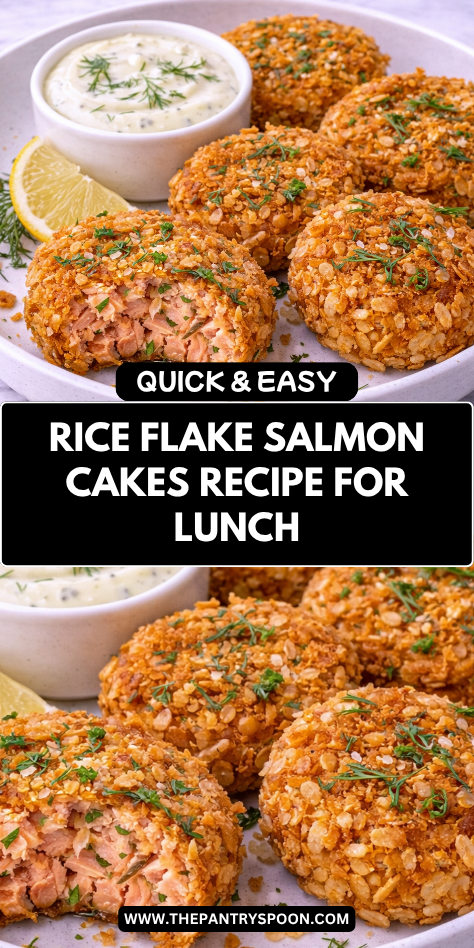
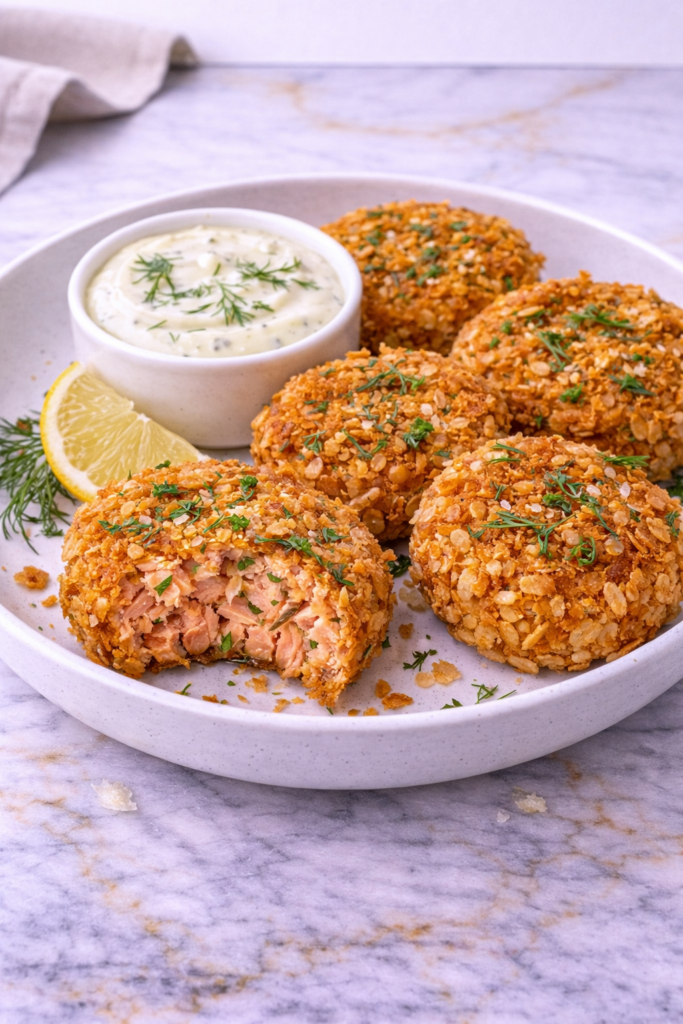
I make rice flake salmon cakes when I want something lighter and crispier than traditional versions made with breadcrumbs. The rice flakes give you a delicate, crunchy coating that doesn’t weigh down the salmon.
I’ll show you how to mix canned or leftover cooked salmon with just enough binder so the cakes hold together without being dense or mushy. They pan-fry quickly and get golden on the outside while staying tender inside.
Serve them with a squeeze of lemon or a simple sauce, and you’ve got something that feels special but uses pantry staples and takes less than thirty minutes.
Why You’ll Love This Recipe
This recipe combines the richness of salmon with the crispiness of rice flakes, creating a delightful texture in every bite. The flavor is savory but light, making it enjoyable for all ages. Unlike heavier fried cakes, these feel airy yet filling.
Rice flakes provide a naturally gluten-free option, making the recipe accessible for different dietary needs. The cakes hold together well, making them easy to pan-fry or bake, and they pair beautifully with a variety of sides, from simple greens to roasted vegetables.
Another reason to love this recipe is its versatility. You can season the cakes with different herbs and spices, add a touch of lemon zest for brightness, or serve with a creamy yogurt sauce, aioli, or tangy salsa. The possibilities are endless, and you can adapt it to suit your taste or occasion.
Serves: 4 people
This recipe yields 8–10 medium-sized salmon cakes, perfect for serving 4 people as a main course. If serving as appetizers, you can cut the cakes smaller and stretch the portions further.
Ingredients You’ll Need
For the Salmon Cakes:
- 2 cups cooked salmon, flaked (fresh, canned, or leftover)
- 1/2 cup cooked rice
- 1 small onion, finely chopped
- 1 clove garlic, minced
- 1 egg, lightly beaten
- 2 tablespoons mayonnaise or Greek yogurt
- 1 tablespoon Dijon mustard
- 1 teaspoon lemon zest
- 1 teaspoon Old Bay seasoning or paprika
- 2 tablespoons fresh parsley, chopped
- Salt and pepper to taste
For the Rice Flake Coating:
- 1 cup rice flakes (puffed rice or flattened rice)
- 1/4 teaspoon salt
- 1/4 teaspoon black pepper
For Frying:
- 2–3 tablespoons olive oil or vegetable oil
Optional Dipping Sauce:
- 1/2 cup plain Greek yogurt or sour cream
- 1 teaspoon lemon juice
- 1 teaspoon Dijon mustard
- Salt and pepper to taste
Pro Tips
Use cooked salmon that is firm and well-drained. Fresh, baked salmon works best, but canned salmon can also be used for convenience.
Cook the onion and garlic lightly before adding to the mixture. This reduces raw sharpness and adds sweetness to the cakes.
Chill the mixture for 15–20 minutes before shaping. This helps the cakes hold together while coating and cooking.
Use gentle pressure when pressing the cakes into rice flakes to ensure the coating adheres without crushing the flakes.
Medium heat is best for frying. Too high and the outside may burn before the inside is cooked; too low and the cakes will absorb too much oil.
Serve immediately for best texture. If needed, keep cooked cakes warm in a low oven while finishing the batch.
Tools You’ll Need
- Mixing bowls
- Knife and cutting board
- Skillet or frying pan
- Spatula
- Measuring cups and spoons
- Baking sheet (if making multiple cakes before frying)
Substitutions and Variations
You can use almond flour or crushed cornflakes for a different type of coating if rice flakes aren’t available.
Swap mayonnaise for Greek yogurt or a plant-based alternative for a lighter, tangy flavor.
Add finely chopped herbs such as dill, chives, or cilantro for additional freshness.
Spice variations: add cayenne, smoked paprika, or chili flakes to the mixture for a little heat.
Serve with avocado slices, a fresh salad, or roasted vegetables for a complete meal.
These rice flake salmon cakes are a simple, protein-packed dish with a crunchy exterior and tender, flavorful interior. Their versatility and ease of preparation make them perfect for weeknight dinners, entertaining, or a special meal with minimal effort.
Make Ahead Tips
Rice flake salmon cakes are ideal for making ahead, which makes them perfect for meal prep or entertaining. You can prepare the salmon mixture in advance and store it in the refrigerator for up to 24 hours. Chilling the mixture helps it firm up, making it easier to shape into cakes and coat with rice flakes.
You can also pre-shape the cakes and store them on a parchment-lined tray, covered tightly with plastic wrap, in the fridge. When ready to cook, simply coat them with rice flakes and fry as directed. This saves time and ensures they hold their shape perfectly.
If you want to make the cakes ahead of time completely, you can fry them, allow them to cool, and store in an airtight container in the refrigerator for up to two days. Reheat gently in a skillet or oven to restore their crispiness. Avoid microwaving, as it can make the coating soft.
Instructions
Step 1: Prepare the Salmon Mixture
In a large bowl, combine the flaked salmon, cooked rice, sautéed onion, minced garlic, egg, mayonnaise, Dijon mustard, lemon zest, Old Bay seasoning, chopped parsley, salt, and pepper. Mix gently until all ingredients are fully incorporated. Avoid overmixing, which can make the cakes dense.
Step 2: Chill the Mixture
Cover the bowl and refrigerate for 15–20 minutes. Chilling firms up the mixture, making it easier to shape into uniform cakes without falling apart during cooking.
Step 3: Shape the Cakes
Divide the mixture into 8–10 equal portions. Using your hands, form each portion into a compact, round or oval-shaped cake, approximately 2–3 inches in diameter. Ensure the cakes are uniform in size for even cooking.
Step 4: Prepare the Rice Flake Coating
Place the rice flakes in a shallow dish. Season with a pinch of salt and pepper, and lightly crush them with your fingers if you want a finer coating. Roll each cake gently in the rice flakes, pressing lightly so the flakes adhere evenly on all sides. This coating gives a crispy, golden exterior.
Step 5: Heat the Oil
In a large skillet, heat 2–3 tablespoons of olive oil or vegetable oil over medium heat. Ensure the oil is hot but not smoking. Proper temperature ensures the cakes become golden and crisp without absorbing too much oil.
Step 6: Fry the Salmon Cakes
Carefully place the coated cakes into the skillet, leaving space between them. Cook for 3–4 minutes per side until golden brown and crispy. Turn gently with a spatula to prevent breaking. Cooking in batches prevents overcrowding, which can lower the oil temperature and result in soggy cakes.
Step 7: Drain Excess Oil
Remove the cooked salmon cakes and place them on a plate lined with paper towels. This removes excess oil and maintains their crisp texture.
Step 8: Prepare the Optional Dipping Sauce
In a small bowl, combine Greek yogurt, lemon juice, Dijon mustard, salt, and pepper. Whisk until smooth. This tangy sauce complements the richness of the salmon and adds a refreshing flavor contrast.
Step 9: Serve the Salmon Cakes
Plate the salmon cakes and drizzle or serve alongside the yogurt dipping sauce. Garnish with fresh herbs, lemon wedges, or extra parsley for added color and flavor.
Step 10: Optional Variations
For a lighter version, bake the salmon cakes in a preheated oven at 375°F (190°C) for 15–20 minutes, flipping halfway through. The rice flake coating will still provide crunch, though slightly less than frying.
You can also experiment with spice levels by adding a pinch of cayenne or smoked paprika to the salmon mixture or sprinkling on the coating before frying.
Serve with a fresh green salad, roasted vegetables, or a grain of your choice, like quinoa or brown rice, for a complete and balanced meal.
Serving Suggestions
Rice flake salmon cakes are versatile and pair well with various sides. Serve with a crisp mixed green salad drizzled with lemon vinaigrette for a refreshing contrast.
For a heartier meal, accompany with roasted or steamed vegetables, such as asparagus, broccoli, or carrots, and a side of cooked quinoa or couscous.
They also make a fantastic protein-packed sandwich. Place a salmon cake in a toasted bun or pita with fresh greens, sliced avocado, and a drizzle of yogurt sauce.
For entertaining or appetizers, serve the cakes as bite-sized sliders with mini dipping bowls of sauce on the side. Garnish with fresh herbs or microgreens to impress guests.
Leftovers and Storage
Store leftover salmon cakes in an airtight container in the refrigerator for up to 2 days. Reheat gently in a skillet or oven to maintain the crisp exterior.
If freezing, cook the cakes fully, allow to cool, and wrap individually in plastic wrap. Place in a freezer-safe container and store for up to 1 month. Reheat in a 350°F (175°C) oven until warmed through to restore crunchiness.
Avoid microwaving leftovers directly, as this will make the rice flake coating soft and reduce crispiness.
Nutrition and Benefits
- Salmon is rich in omega-3 fatty acids and high-quality protein, supporting heart and brain health.
- Rice flakes provide a light, gluten-free coating and contribute texture without heavy carbs.
- Including vegetables, herbs, and seasonings adds fiber, antioxidants, and micronutrients.
- The optional yogurt sauce adds creaminess and tang, enhancing flavor while providing additional protein.
- Overall, this recipe is a balanced, nutritious, and flavorful dish suitable for main meals, appetizers, or protein-rich snacks.
Recipe FAQ
Can I use canned salmon instead of fresh?
Yes, drained and flaked canned salmon works well. Adjust seasoning to taste.
Are rice flakes gluten-free?
Most rice flakes are naturally gluten-free, but check packaging if you have dietary restrictions.
Can I bake the cakes instead of frying?
Yes, bake at 375°F (190°C) for 15–20 minutes, flipping halfway. They will still be crispy but slightly less crunchy than frying.
Can I make the mixture ahead of time?
Yes, prepare the salmon mixture up to 24 hours in advance. Shape and coat just before cooking.
Can I freeze the uncooked cakes?
Yes, shape and coat, then freeze on a tray individually before transferring to a freezer-safe container. Cook directly from frozen, adding a few extra minutes to cooking time.
What can I serve with these cakes?
They pair well with yogurt sauce, lemon wedges, roasted vegetables, fresh salad, or grains like rice or quinoa.
Can I add other flavors to the cakes?
Absolutely! Add spices like cayenne, smoked paprika, or fresh herbs such as dill or cilantro for variation.
Crispy, Flavorful, and Protein-Packed
These rice flake salmon cakes are a simple way to enjoy a crunchy, flavorful, and nutritious meal. The golden exterior, tender interior, and bright seasoning make them a standout dish for any occasion.
Whether served for dinner, lunch, or as a party appetizer, they fit naturally into real life. With easy preparation, versatile flavor, and healthy ingredients, this recipe is one you’ll return to again and again.