I used to skip pork tenderloin at the store because I wasn’t sure how to cook it without drying it out. Once I figured out the right method, it became one of my most reached-for weeknight proteins.
It cooks faster than you’d expect, stays juicy when you handle it right, and takes on seasoning really well.
I’ll walk you through everything from how to trim it to how to know when it’s done. If pork tenderloin has felt intimidating before, I think this will change that for you.

Why You’ll Love This Recipe
This pork tenderloin recipe is all about balance, combining simple ingredients with big, satisfying flavor. The outside develops a beautifully seasoned crust, while the inside stays tender and juicy, making every bite feel comforting and complete.
It’s also incredibly easy to prepare, even if you’re not used to cooking pork. With just a few steps and pantry staples, you can create a dish that feels restaurant-quality without the stress or extra effort.
Another reason this recipe stands out is how flexible it is for families. You can pair it with almost anything, adjust the seasoning to your taste, and even prepare it ahead of time for those extra busy days.
Serves: 4 people
This recipe comfortably serves four people, making it perfect for a small family dinner. If you’re feeding a larger group, you can easily double the ingredients without changing the cooking method.
Leftovers are just as delicious the next day, so it’s a great option if you like having ready-to-go meals. It’s also easy to slice thinner to stretch portions for younger kids or lighter appetites.
Ingredients You’ll Need
- 1 ½ pounds pork tenderloin (trimmed)
- 2 tablespoons olive oil
- 3 cloves garlic (minced)
- 1 teaspoon salt
- ½ teaspoon black pepper
- 1 teaspoon paprika
- 1 teaspoon Italian seasoning
- ½ teaspoon onion powder
- ½ teaspoon dried thyme
- 1 tablespoon Dijon mustard
- 1 tablespoon honey
- 1 tablespoon soy sauce
- 1 tablespoon lemon juice
Pro Tips
- Let the pork tenderloin sit at room temperature for about 15–20 minutes before cooking. This helps it cook more evenly and keeps the inside tender.
- Pat the pork dry with paper towels before seasoning. Removing excess moisture helps create a better crust when searing.
- Don’t skip the searing step, as it locks in flavor and gives the outside a beautiful golden color. This small step makes a big difference in the final taste.
- Use a meat thermometer to avoid overcooking. Pork tenderloin is best when it reaches an internal temperature of 145°F, followed by a short resting time.
- Let the meat rest for at least 5 minutes after cooking. This allows the juices to redistribute, keeping every slice moist and flavorful.
- Slice against the grain when serving. This simple technique ensures each piece is tender and easy to chew, especially for kids.
Tools You’ll Need
- Large skillet (oven-safe preferred)
- Tongs
- Cutting board
- Sharp knife
- Small mixing bowl
- Measuring spoons
- Meat thermometer
- Aluminum foil
Substitutions and Variations
If you don’t have pork tenderloin, you can use pork loin, but keep in mind it may require a slightly longer cooking time. Chicken breast or thighs can also work as an alternative if you prefer a different protein.
For flavor variations, you can swap the Italian seasoning for a smoky barbecue blend or add a touch of brown sugar for a sweeter glaze. If you prefer a bit of heat, a pinch of red pepper flakes or chili powder can add a gentle kick without overpowering the dish.
You can also adjust the marinade to suit your pantry. Maple syrup works beautifully in place of honey, and balsamic vinegar can be used instead of lemon juice for a deeper, richer flavor profile.
If you’re cooking for kids with milder tastes, simply reduce the spices slightly while keeping the garlic and honey. This keeps the flavor approachable while still being delicious for everyone at the table.
Make Ahead Tips
This pork tenderloin recipe is a great option for planning ahead, especially on busy weeks when time feels limited. You can prepare the marinade up to 24 hours in advance and store it in the refrigerator until you’re ready to use it.
For even deeper flavor, marinate the pork tenderloin overnight in a sealed container or zip-top bag. This allows the seasoning to fully soak into the meat, resulting in a more tender and flavorful final dish.
If you want to go a step further, you can also sear the pork ahead of time and refrigerate it. When ready to serve, simply finish it in the oven until it reaches the proper internal temperature.
Cooked pork tenderloin can also be stored and reheated easily, making it a great meal prep option. Slice it ahead of time or keep it whole to retain moisture during reheating.
Instructions
Step 1: Prepare the Pork
Start by removing the pork tenderloin from the refrigerator and letting it sit at room temperature for 15–20 minutes. Pat it dry thoroughly with paper towels to help the seasoning stick and create a better crust.
Trim any excess silver skin if needed, as this can make the meat tough when cooked. Place the pork on a clean cutting board and set it aside while you prepare the seasoning.
Step 2: Mix the Seasoning and Marinade
In a small bowl, combine olive oil, minced garlic, salt, black pepper, paprika, Italian seasoning, onion powder, and dried thyme. Stir until everything is well blended into a fragrant mixture.
Add Dijon mustard, honey, soy sauce, and lemon juice to the bowl. Mix again until the marinade becomes smooth and slightly glossy.
Step 3: Season the Pork
Rub the marinade evenly over the entire pork tenderloin, making sure every side is coated. Use your hands or a spoon to press the seasoning gently into the meat.
Allow the pork to sit with the marinade for at least 10–15 minutes. If you have more time, covering and refrigerating it for longer will deepen the flavor.
Step 4: Sear the Pork
Heat a large oven-safe skillet over medium-high heat. Once hot, place the pork tenderloin in the skillet and sear it on all sides until golden brown, about 2–3 minutes per side.
Use tongs to turn the pork gently to avoid tearing the surface. This step builds a rich flavor base and locks in juices.
Step 5: Transfer to Oven
Preheat your oven to 400°F while the pork is searing. Once all sides are browned, transfer the skillet directly into the oven.
Roast the pork tenderloin for 12–15 minutes, or until it reaches an internal temperature of 145°F. Use a meat thermometer to ensure accuracy and avoid overcooking.
Step 6: Rest and Slice
Remove the pork from the oven and transfer it to a cutting board. Loosely cover it with aluminum foil and let it rest for at least 5 minutes.
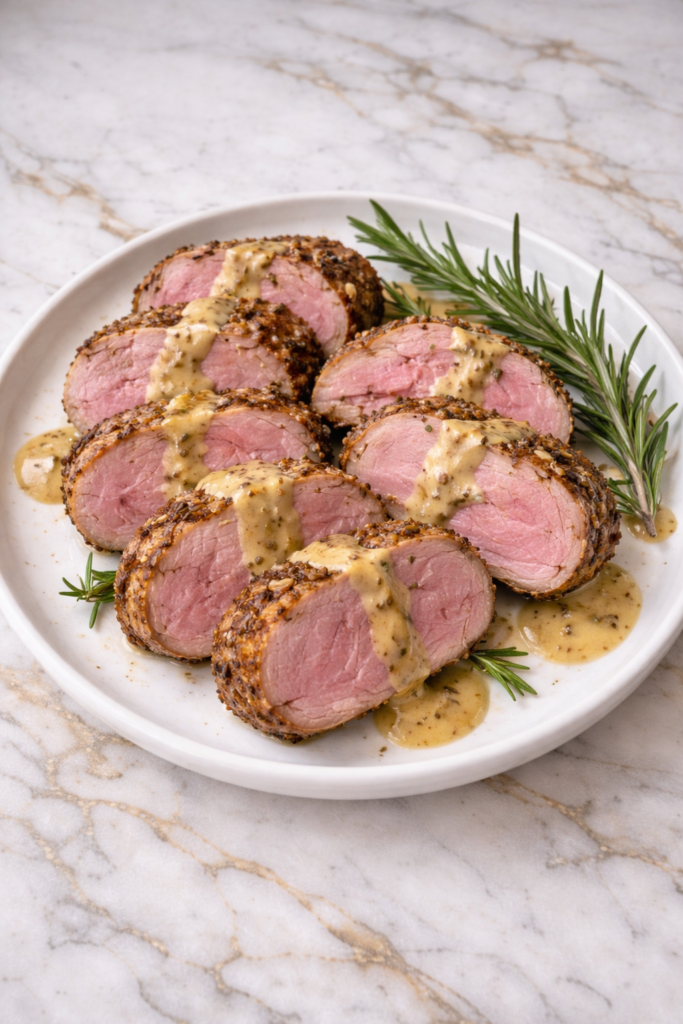
After resting, slice the pork into even medallions using a sharp knife. Be sure to cut against the grain to keep each piece tender.
Serving Suggestions
This pork tenderloin pairs beautifully with creamy mashed potatoes, which soak up the flavorful juices and create a comforting, hearty meal. Roasted vegetables like carrots, green beans, or broccoli add a nice balance and bring color to the plate.
For a lighter option, serve it alongside a crisp green salad with a simple vinaigrette. The freshness complements the richness of the pork without overpowering it.
It also works well with rice or quinoa, making it easy to turn into a well-rounded meal. You can even slice the pork thin and serve it in wraps or sandwiches for a quick and satisfying option.
If you’re serving kids, consider pairing it with buttered noodles or simple roasted potatoes. These familiar sides make the dish more approachable while still keeping it delicious.
For a slightly elevated presentation, drizzle any remaining pan juices over the sliced pork before serving. This adds an extra layer of flavor and keeps the meat moist.
Leftovers and Storage
Leftover pork tenderloin stores very well, making it ideal for next-day meals. Allow the pork to cool completely before transferring it to an airtight container.
Store it in the refrigerator for up to 3–4 days. Keeping it whole rather than sliced helps retain moisture and prevents it from drying out.
To reheat, place slices in a skillet over low heat with a splash of broth or water. Cover the pan to trap steam and gently warm the pork without overcooking it.
You can also reheat it in the microwave in short intervals, covering it with a damp paper towel. This helps maintain moisture and keeps the texture tender.
For longer storage, freeze the cooked pork in airtight packaging for up to 2–3 months. Thaw it overnight in the refrigerator before reheating for best results.
Nutrition and Benefits
- Pork tenderloin is a lean source of protein, making it a great option for balanced family meals. It supports muscle growth and helps keep you feeling full longer.
- This recipe uses simple, wholesome ingredients without heavy creams or processed sauces. That makes it a lighter option compared to many other comfort dishes.
- Garlic and herbs add natural flavor while also providing antioxidants. These ingredients can support overall wellness without adding extra calories.
- The moderate use of healthy fats like olive oil helps enhance flavor while supporting heart health. It also aids in the absorption of certain nutrients.
- This dish is naturally low in carbohydrates, making it suitable for a variety of dietary preferences. It can easily be paired with different sides to meet your family’s needs.
Recipe FAQ
Can I use pork loin instead of pork tenderloin?
Yes, but pork loin is larger and less tender than tenderloin. It will require a longer cooking time and careful monitoring to avoid drying out. Using a meat thermometer is especially important in this case.
How do I know when the pork is fully cooked?
The best way is to use a meat thermometer and check for an internal temperature of 145°F. The pork should be slightly pink in the center and very juicy. Letting it rest after cooking is just as important as reaching the correct temperature.
Can I make this recipe without an oven-safe skillet?
Yes, you can sear the pork in a regular skillet and then transfer it to a baking dish. Just be sure to move it carefully to retain as much of the seasoning and juices as possible. The cooking time in the oven remains the same.
Is it okay to marinate the pork overnight?
Absolutely, marinating overnight can enhance the flavor significantly. Just be sure to store it in a sealed container in the refrigerator. This also helps tenderize the meat even more.
What if I don’t have Dijon mustard?
You can substitute it with yellow mustard or even a small amount of whole grain mustard. The flavor will be slightly different but still delicious. If needed, you can omit it and rely on the other seasonings.
Can I cook this on the grill instead?
Yes, grilling works very well for pork tenderloin. Sear it over direct heat first, then move it to indirect heat until it reaches 145°F internally. This gives it a slightly smoky flavor that many people enjoy.
Why is my pork tenderloin dry?
Overcooking is the most common reason for dry pork tenderloin. Using a thermometer and removing it at 145°F helps prevent this. Letting it rest before slicing also keeps the juices locked inside.
A Cozy Family Favorite Worth Making Again
This pork tenderloin recipe brings together simple ingredients and dependable results, making it an easy choice for both busy weeknights and relaxed family dinners. It delivers tender, flavorful slices every time, creating a meal that feels comforting without requiring complicated steps.
With its versatility and family-friendly appeal, this recipe easily becomes a reliable go-to in any kitchen. It’s the kind of dish that fits naturally into your routine while still feeling special enough to share.