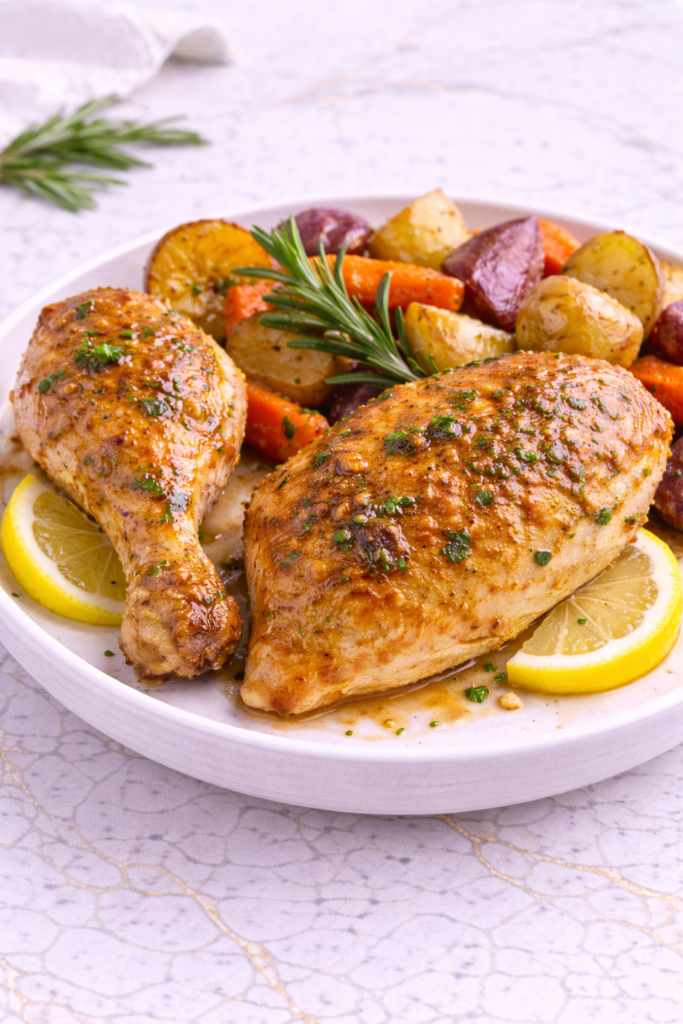
I make lemon herb roast chicken when I want a meal that feels simple but still fills the kitchen with a warm, steady aroma. It’s one of those recipes that doesn’t require much effort, yet always feels complete. I like how the lemon keeps the flavor fresh while the herbs add a gentle depth. It’s a dish I turn to when I want something dependable.
At home, this roast chicken has become a regular part of our routine, especially on weekends or slower evenings. The kids enjoy the tender meat, and I like that it pairs easily with whatever sides we have. It also makes great leftovers, which helps with planning ahead. After making it a few times, the steps feel natural and easy to follow.

Why You’ll Love This Recipe
This lemon herb roast chicken has a crisp, golden skin with juicy, tender meat underneath. The lemon adds a light brightness that balances the richness of the chicken, while the herbs bring a calm, savory flavor. It’s a combination that feels both fresh and comforting.
Another reason to love this recipe is how straightforward it is to prepare. With just a few ingredients and simple steps, you can create a meal that feels homemade without extra work. It’s a good choice for both beginners and experienced cooks.
It’s also a versatile dish that works well for many occasions. You can serve it for a family dinner, meal prep, or even a small gathering. This flexibility makes it a practical recipe to keep on hand.
Serves: 4 people
This recipe makes enough for about four servings, depending on the size of the chicken and portion sizes. It works well for a family meal with leftovers to enjoy later. You can adjust the size if needed for a larger group.
Ingredients You’ll Need
- 1 whole chicken (about 4 to 5 pounds)
- 2 tablespoons olive oil or melted butter
- 1 lemon, halved
- 3 cloves garlic, minced
- 1 teaspoon salt
- 1/2 teaspoon black pepper
- 1 teaspoon dried thyme
- 1 teaspoon dried rosemary
- 1 teaspoon dried oregano
Optional additions:
- Fresh herbs (thyme, rosemary, or parsley)
- Extra lemon slices for roasting
Pro Tips
Pat the chicken dry before seasoning. This helps the skin become crisp during roasting.
Season both the outside and inside of the chicken. This ensures the flavor is evenly distributed.
Tie the legs together loosely for even cooking. This helps the chicken hold its shape.
Place the chicken breast-side up for the best texture. This keeps the meat juicy while the skin crisps.
Let the chicken rest after roasting. This helps keep the juices inside and makes carving easier.
Use a meat thermometer to check for doneness. The internal temperature should reach 165°F.
Tools You’ll Need
- Roasting pan or baking dish
- Knife and cutting board
- Kitchen twine (optional)
- Basting brush or spoon
- Meat thermometer
- Tongs
Substitutions and Variations
Use Fresh Herbs
Replace dried herbs with fresh ones for a brighter flavor. Use about three times the amount of fresh herbs.
Change the Citrus
Swap lemon with orange or a mix of both. This creates a slightly sweeter, milder flavor.
Add Vegetables
Roast carrots, potatoes, or onions in the pan. They cook alongside the chicken and absorb the juices.
Make It Butter-Based
Use softened butter instead of olive oil for a richer flavor. Rub it under the skin for extra moisture.
Adjust the Seasoning
Add paprika or garlic powder for a deeper flavor. This helps customize the taste without changing the method.
Make Ahead Tips
Lemon herb roast chicken can be prepped ahead to make cooking day feel easier and more relaxed. You can season the chicken up to 24 hours in advance and store it covered in the refrigerator. This allows the flavors to settle into the meat and can improve the overall taste.
If you want to save time, you can also prepare the herb mixture and cut the lemon ahead of time. Keep everything stored separately until you are ready to assemble. This keeps the process simple and organized when it’s time to cook.
For meal planning, you can roast the chicken fully and store it for later use. It reheats well and can be used in a variety of meals. This makes it a practical option for busy weeks.
Instructions
Step 1: Preheat the Oven
Preheat your oven to 425°F. Make sure the rack is positioned in the center for even cooking. This higher temperature helps create a crisp, golden skin.
Step 2: Prepare the Chicken
Remove the chicken from its packaging and pat it dry with paper towels. Place it in a roasting pan or baking dish. Drying the skin helps it crisp up during roasting.
Step 3: Season the Chicken
In a small bowl, mix the olive oil or melted butter with garlic, salt, pepper, and dried herbs. Rub the mixture evenly over the outside of the chicken and inside the cavity. This helps distribute the flavor throughout.
Step 4: Add Lemon
Place the lemon halves inside the cavity of the chicken. If using extra lemon slices, arrange them around the chicken in the pan. This adds moisture and a light citrus flavor.
Step 5: Tie and Position
Tie the legs together loosely with kitchen twine if desired. Tuck the wings under the body to prevent burning. Position the chicken breast-side up in the pan.
Step 6: Roast the Chicken
Place the chicken in the oven and roast for about 1 hour to 1 hour 15 minutes. The skin should become golden and crisp. Baste once or twice during cooking if desired.
Step 7: Check for Doneness
Use a meat thermometer to check the thickest part of the thigh. The internal temperature should reach 165°F. This ensures the chicken is fully cooked.
Step 8: Rest Before Carving
Remove the chicken from the oven and let it rest for 10 to 15 minutes. This allows the juices to settle and keeps the meat tender. Do not skip this step.
Step 9: Carve and Serve
Transfer the chicken to a cutting board and carve into pieces. Serve warm with pan juices spooned over the top if desired. This adds extra flavor and moisture.
Serving Suggestions
Lemon herb roast chicken pairs well with simple roasted vegetables like carrots, potatoes, or green beans. The vegetables absorb the juices from the chicken and create a balanced meal. This makes it an easy one-pan option.
It also works nicely with a fresh green salad or a light grain side like rice or quinoa. The brightness of the lemon complements lighter sides. This keeps the meal from feeling too heavy.
For a more comforting option, serve it with mashed potatoes or warm bread. These sides help soak up the flavorful juices. It’s a simple way to make the meal feel complete.
Leftover chicken can also be served in sandwiches, wraps, or salads. This makes it useful beyond the initial meal. It’s a practical choice for meal prep.
Leftovers and Storage
Store leftover lemon herb roast chicken in an airtight container in the refrigerator for up to four days. Keeping it sealed helps maintain its moisture and flavor. Store the meat and any juices together for best results.
To reheat, place the chicken in the oven at 325°F until warmed through. Covering it loosely with foil helps prevent it from drying out. You can also reheat smaller portions in the microwave.
For longer storage, remove the meat from the bones and freeze it in a freezer-safe container for up to two months. Thaw overnight in the refrigerator before reheating. This makes it easy to use in future meals.
If the chicken seems dry after storage, add a small amount of broth or pan juices when reheating. This helps restore moisture. Proper storage keeps it enjoyable for later use.
Nutrition and Benefits
- Chicken is a high-quality source of protein, helping support energy and balanced meals.
- Using herbs and lemon adds flavor without relying on heavy sauces or excess salt.
- Roasting allows excess fat to render out, creating a lighter cooking method compared to frying.
- This dish pairs easily with vegetables, making it simple to build a balanced plate.
- Preparing it at home allows you to control ingredients and avoid unnecessary additives.
Recipe FAQ
Can I use chicken pieces instead of a whole chicken?
Yes, you can use thighs, drumsticks, or breasts instead. Adjust the cooking time based on the size of the pieces. Smaller cuts will cook faster than a whole chicken.
How do I keep the chicken from drying out?
Avoid overcooking and use a meat thermometer to check doneness. Letting the chicken rest after roasting also helps retain moisture. Basting during cooking can add extra moisture.
Can I cook this at a lower temperature?
Yes, you can roast at 375°F for a longer time. The skin may be slightly less crisp, but the chicken will still be tender. Adjust cooking time as needed.
Do I need to baste the chicken?
Basting is optional but can help add flavor and moisture. The chicken will still cook well without it. If you choose to baste, do so once or twice during roasting.
Can I add vegetables to the pan?
Yes, vegetables like potatoes, carrots, and onions can be added. They will cook alongside the chicken and absorb the juices. Cut them into even pieces for consistent cooking.
How do I know when the chicken is fully cooked?
Use a meat thermometer and check the thickest part of the thigh. It should reach 165°F. The juices should also run clear when pierced.
Can I make this recipe ahead for a gathering?
Yes, you can roast the chicken ahead and reheat it before serving. Keep it covered to retain moisture. This makes it easier to manage timing for meals.
A Simple Roast That Brings Everyone to the Table
Lemon herb roast chicken is a dependable recipe that brings together simple ingredients and steady steps to create a meal that feels complete. The crisp skin, tender meat, and light citrus flavor make it easy to enjoy for both everyday dinners and special moments. It’s a dish that delivers consistent results without adding extra work.
With its flexibility and make-ahead options, it fits naturally into busy routines while still feeling homemade. Whether served fresh from the oven or enjoyed as leftovers, it remains a reliable choice. Having a recipe like this on hand makes home cooking feel calm and rewarding.