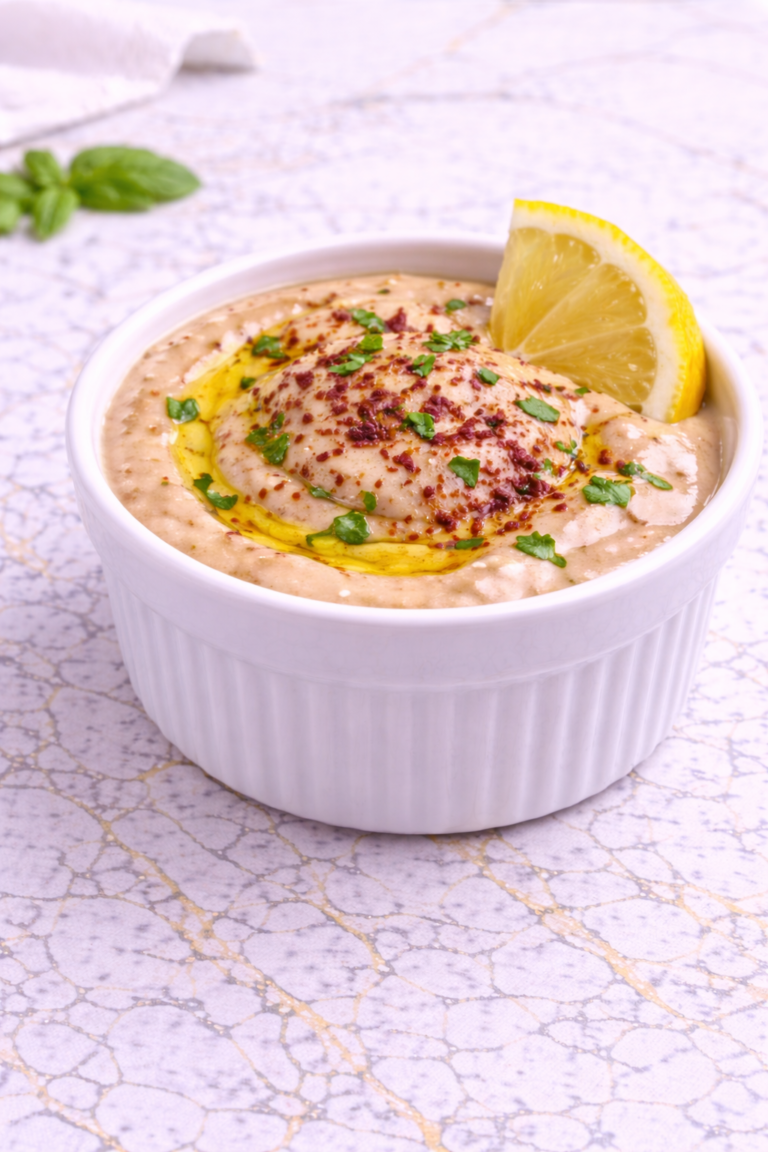
I make Baba Ganoush when I want something creamy, smoky, and simple without needing a heavy meal. It is one of those dips that feels special, but it is made with basic ingredients I usually keep in the kitchen.
The first time I made it at home, I learned that the secret is letting the eggplant cook until it becomes soft and deeply tender. Once it is mashed with tahini, lemon juice, garlic, and olive oil, it turns into a smooth, cozy dip that works for snacks, lunches, and family-style dinners.
Why You’ll Love This Recipe
Baba Ganoush is rich and creamy without feeling too heavy. The roasted eggplant gives it a gentle smoky flavor, while the tahini adds a smooth, nutty taste that makes every bite feel balanced.
It is also easy to serve in many ways, which makes it great for families. You can scoop it with pita bread, spread it on sandwiches, serve it with grilled meat, or add it to a snack board with fresh vegetables.
I love that this recipe can be made ahead and kept in the fridge for busy days. It tastes even better after the flavors have time to settle, so it is a dependable dip for meal prep, school lunches, and casual dinners at home.
Serves: 6 people
This Baba Ganoush recipe makes enough for about 6 people as an appetizer or side dish. If you are serving it as part of a larger meal with pita, salad, and grilled protein, it can stretch a little further.
For a smaller family, the leftovers keep well and are easy to use throughout the week. You can also double the recipe for a party, holiday table, or meal prep container.
Ingredients You’ll Need
- 2 large eggplants, about 2 pounds total
- 1/4 cup tahini, well stirred
- 3 tablespoons fresh lemon juice
- 2 tablespoons extra virgin olive oil, plus more for serving
- 2 garlic cloves, finely minced or grated
- 1/2 teaspoon fine sea salt, plus more to taste
- 1/4 teaspoon ground cumin
- 1 tablespoon chopped fresh parsley, plus more for garnish
- 1/4 teaspoon smoked paprika, optional for garnish
- 1 tablespoon pomegranate seeds, optional for garnish
- Warm pita bread, pita chips, or fresh vegetables, for serving
Pro Tips
Use eggplants that feel heavy for their size and have smooth, shiny skin. Fresh eggplants usually have better flavor and fewer bitter notes, which helps the dip taste mild and creamy.
Roast the eggplants until they collapse and feel very soft when pressed. If the inside is still firm, the Baba Ganoush will not mash smoothly and may taste a little raw.
Let the cooked eggplant drain before mixing it with the other ingredients. Eggplant holds a lot of water, and draining helps keep the dip thick instead of watery.
Start with less garlic if you are serving children or anyone who prefers a mild flavor. Raw garlic becomes stronger as the dip sits, so a small amount can go a long way.
Stir the tahini well before measuring it because it can separate in the jar. A smooth tahini helps create a creamy texture and keeps the dip from tasting oily or uneven.
Taste the dip before serving and adjust the lemon juice and salt as needed. Baba Ganoush should taste bright, creamy, and savory, so a small squeeze of lemon can make a big difference.
Tools You’ll Need
- Baking sheet
- Parchment paper or foil
- Sharp knife
- Cutting board
- Fork
- Mixing bowl
- Spoon or silicone spatula
- Measuring cups
- Measuring spoons
- Fine mesh strainer or colander
- Small serving bowl
- Citrus juicer, optional
- Garlic grater or garlic press, optional
Substitutions and Variations
Make It Extra Smoky
Roast the eggplants over a gas flame or on a grill instead of baking them in the oven. This gives the dip a deeper smoky flavor while keeping the same creamy base.
Use a Milder Garlic Flavor
Roast the garlic with the eggplant or use just 1 small garlic clove. This is a good option for kids or anyone who likes a softer, sweeter garlic taste.
Make It Tahini-Free
Use plain Greek yogurt in place of tahini for a lighter, tangier version. The flavor will be different, but it still makes a creamy eggplant dip that works well with pita and vegetables.
Add More Texture
Top the finished dip with toasted pine nuts, sesame seeds, or pomegranate seeds. These add a little crunch and color without changing the main flavor of the Baba Ganoush.
Make It Heartier
Serve it with hummus, olives, chopped cucumbers, tomatoes, and warm pita to turn it into a simple meal plate. This keeps the dip recognizable while making it more filling for lunch or dinner.
Make Ahead Tips
Baba Ganoush is a wonderful make-ahead recipe because the flavor gets even better after it rests. The lemon, garlic, tahini, and roasted eggplant have time to blend together, which makes the dip taste smoother and more balanced.
You can roast the eggplants up to 2 days ahead of time. Let them cool, scoop out the flesh, drain it well, and store it in an airtight container in the fridge until you are ready to mix the dip.
You can also make the full dip 1 day before serving. Keep it covered in the refrigerator, then stir it well before placing it in a serving bowl.
If the Baba Ganoush thickens in the fridge, add a small drizzle of olive oil or a teaspoon of water. Taste it again before serving because chilled dips often need a little extra lemon juice or salt to wake up the flavor.
For parties or family meals, spoon it into the serving bowl ahead of time but wait to add the garnish. Fresh parsley, paprika, olive oil, and pomegranate seeds look best when added right before serving.
Instructions
Step 1: Prepare the Eggplants
Preheat the oven to 425°F. Line a baking sheet with parchment paper or foil to make cleanup easier.
Wash and dry the 2 large eggplants, then use a fork to poke holes all over the skin. This helps steam escape while the eggplants roast and keeps them from bursting in the oven.
Place the eggplants on the prepared baking sheet. Set them directly on the sheet with a little space between them so the heat can move around evenly.
Step 2: Roast Until Soft
Roast the eggplants for 40 to 50 minutes, turning them once halfway through. They are ready when the skins are wrinkled, the eggplants look collapsed, and the inside feels very soft.
The eggplants should not feel firm when gently pressed with tongs or a spoon. A soft texture is important because it helps the Baba Ganoush turn creamy without needing a blender.
If your eggplants are very large, they may need 5 to 10 extra minutes. It is better to roast them a little longer than to stop too soon.
Step 3: Cool and Scoop
Remove the eggplants from the oven and let them cool for about 15 minutes. They should be cool enough to handle but still warm inside.
Slice each eggplant open lengthwise with a sharp knife. Use a spoon to scoop the soft flesh into a fine mesh strainer or colander.
Discard the skins and any tough stem pieces. The flesh may look a little loose or watery, and that is normal.
Step 4: Drain the Eggplant
Let the eggplant flesh drain for 10 to 15 minutes. Gently press it with the back of a spoon to remove extra liquid.
This step helps the Baba Ganoush stay thick and creamy instead of thin or watery. Do not skip it, especially if your eggplants released a lot of moisture.
After draining, transfer the eggplant flesh to a mixing bowl. If there are large pieces, break them up with a fork.
Step 5: Mix the Flavor Base
Add 1/4 cup well-stirred tahini, 3 tablespoons fresh lemon juice, 2 tablespoons extra virgin olive oil, 2 finely minced or grated garlic cloves, 1/2 teaspoon fine sea salt, and 1/4 teaspoon ground cumin to the bowl.
Stir everything together with a fork or spoon until the mixture looks creamy and well combined. Mash the eggplant as you stir, leaving it as smooth or as rustic as your family likes.
For a very smooth dip, mash a little longer until most of the eggplant strands disappear. For a more traditional texture, keep it slightly chunky.
Step 6: Taste and Adjust
Taste the Baba Ganoush and adjust it as needed. Add a little more salt for savory flavor, more lemon juice for brightness, or a small drizzle of olive oil for richness.
If the garlic tastes strong, let the dip rest for 20 to 30 minutes before serving. The flavor will soften slightly as it sits.
If the dip tastes flat, it usually needs either salt or lemon. Add a small amount at a time, stir well, and taste again.
Step 7: Garnish and Serve
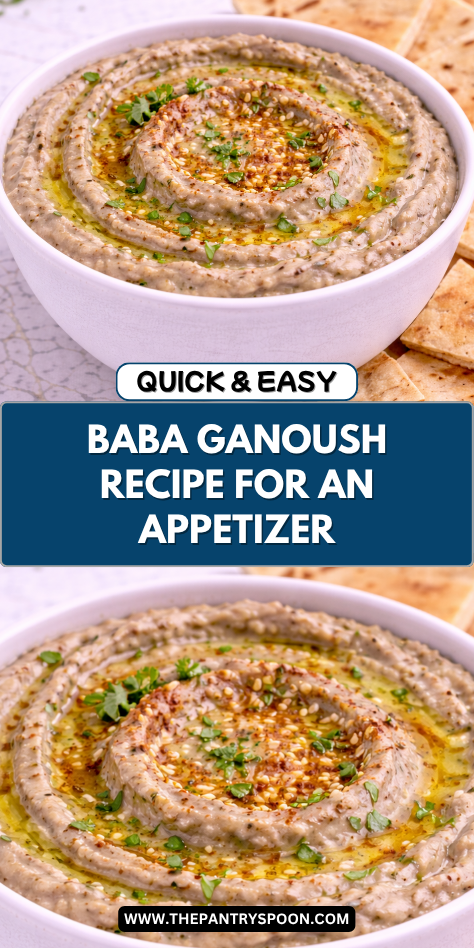
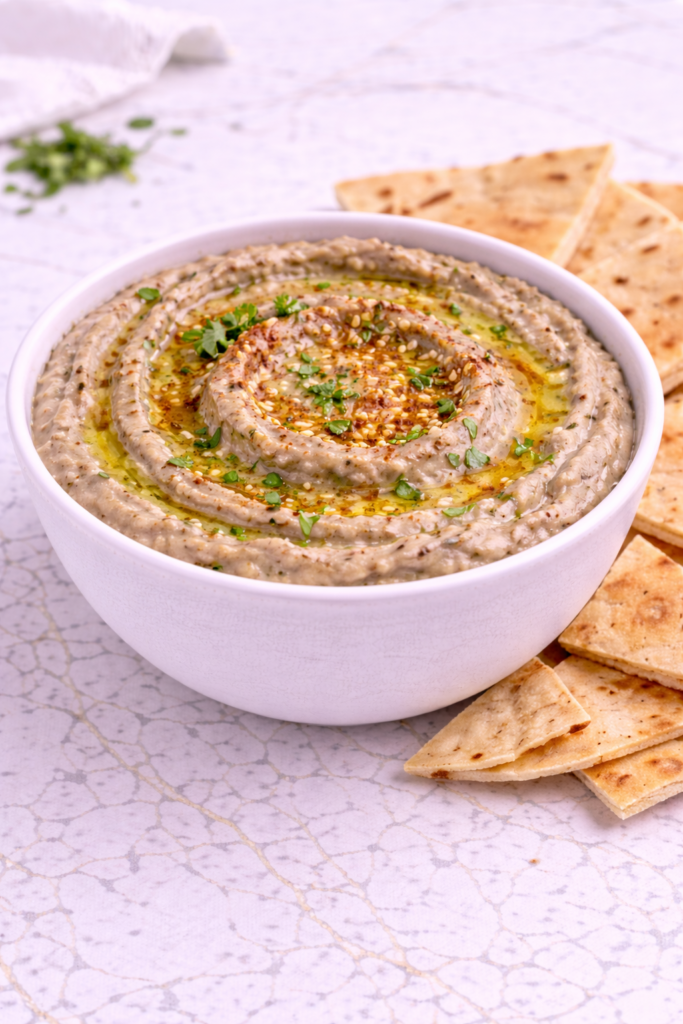
Spoon the Baba Ganoush into a small serving bowl and spread it gently with the back of a spoon. Make a few soft swirls on top so the olive oil can settle into the dip.
Drizzle with extra virgin olive oil and sprinkle with 1 tablespoon chopped fresh parsley. Add 1/4 teaspoon smoked paprika and 1 tablespoon pomegranate seeds if you want a colorful finish.
Serve with warm pita bread, pita chips, cucumber slices, carrot sticks, bell pepper strips, or crackers. It can be served slightly warm, at room temperature, or chilled from the fridge.
Serving Suggestions
Baba Ganoush is lovely with warm pita bread because the soft bread scoops up the creamy dip so well. Lightly toasting the pita adds a little crisp edge that works nicely with the smoky eggplant.
It also makes a fresh snack plate with sliced cucumbers, carrots, cherry tomatoes, and bell peppers. This is one of my favorite ways to serve it to kids because they can choose what they want to dip.
For lunch, spread Baba Ganoush inside a wrap with grilled chicken, lettuce, tomatoes, and cucumbers. It adds creaminess without needing mayonnaise or a heavy sauce.
You can serve it next to grilled meats, roasted vegetables, or rice bowls. The lemon and tahini help balance richer foods and make the plate feel fresh.
It is also a great part of a family-style mezze board. Add hummus, olives, feta, tabbouleh, and pita for an easy meal that feels relaxed and shareable.
For a lighter option, spoon it over a salad or grain bowl. It works almost like a creamy dressing and adds flavor without much effort.
Leftovers and Storage
Store leftover Baba Ganoush in an airtight container in the refrigerator for up to 4 days. Smooth the top with a spoon and add a thin drizzle of olive oil before covering if you want to help keep it fresh.
The dip may thicken as it chills, so stir it well before serving again. If it seems too thick, mix in a teaspoon of water, lemon juice, or olive oil until it reaches the texture you like.
Baba Ganoush is best served cold or at room temperature. Let it sit on the counter for 15 to 20 minutes before serving if it has been in the fridge.
Freezing is possible, but the texture may become a little watery after thawing. If you freeze it, place it in a freezer-safe container for up to 2 months, thaw overnight in the fridge, drain any extra liquid, and stir well before serving.
Nutrition and Benefits
- Full of vegetables: Baba Ganoush is made mostly from roasted eggplant, which adds fiber and helps make the dip feel satisfying. It is a simple way to bring more vegetables to snacks and meals.
- Naturally creamy: Tahini and olive oil create a smooth texture without needing heavy cream or cheese. This makes it a good option for many family tables.
- Rich in healthy fats: Extra virgin olive oil and tahini add fats that help make the dip filling. They also give the Baba Ganoush its rich, rounded flavor.
- Bright and flavorful: Lemon juice and garlic bring fresh flavor, so the dip tastes lively without needing many ingredients. A small amount of seasoning goes a long way here.
- Great for balanced snacking: When served with vegetables or whole wheat pita, Baba Ganoush can be part of a wholesome snack or light meal. It offers fiber, flavor, and a creamy texture that feels comforting.
Recipe FAQ
Can I make Baba Ganoush without tahini?
Yes, you can make it without tahini, but the flavor and texture will change. Tahini gives Baba Ganoush its nutty taste and creamy body. If needed, you can use plain Greek yogurt or a little extra olive oil instead.
Why is my Baba Ganoush watery?
Baba Ganoush can turn watery if the roasted eggplant is not drained well. Eggplant holds a lot of moisture, especially after roasting. Let the cooked flesh sit in a strainer and gently press out the extra liquid before mixing.
Can I use a blender or food processor?
Yes, but use it carefully. A food processor will make the dip very smooth, while hand-mashing gives it a more rustic texture. Pulse only a few times so it does not become too loose.
How do I make Baba Ganoush taste smoky?
The smokiest flavor comes from cooking the eggplant over a gas flame or on a grill. You can also roast it in the oven and add a small pinch of smoked paprika. Do not add too much, or it may overpower the eggplant.
Is Baba Ganoush served warm or cold?
Baba Ganoush can be served slightly warm, chilled, or at room temperature. I like it best at room temperature because the flavors taste softer and more balanced. If it has been refrigerated, let it sit out briefly before serving.
Can kids eat Baba Ganoush?
Yes, many kids enjoy Baba Ganoush when it is served with pita, crackers, or crunchy vegetables. For a milder version, use less garlic and a little less lemon juice. You can always add more seasoning to the adult portions later.
How long does Baba Ganoush last in the fridge?
Baba Ganoush lasts up to 4 days when stored in an airtight container in the refrigerator. Stir it before serving because a little liquid may separate. Add fresh parsley or olive oil after stirring to make it look fresh again.
A Creamy Dip to Bring Everyone to the Table
Baba Ganoush is one of those simple recipes that feels calm, cozy, and useful in a busy kitchen. It takes humble eggplant and turns it into a creamy dip with smoky flavor, bright lemon, and a smooth tahini finish.
It is easy to make ahead, simple to serve, and flexible enough for snacks, lunches, or family dinners. Once it becomes part of your routine, it is the kind of dependable recipe you will be glad to make again.