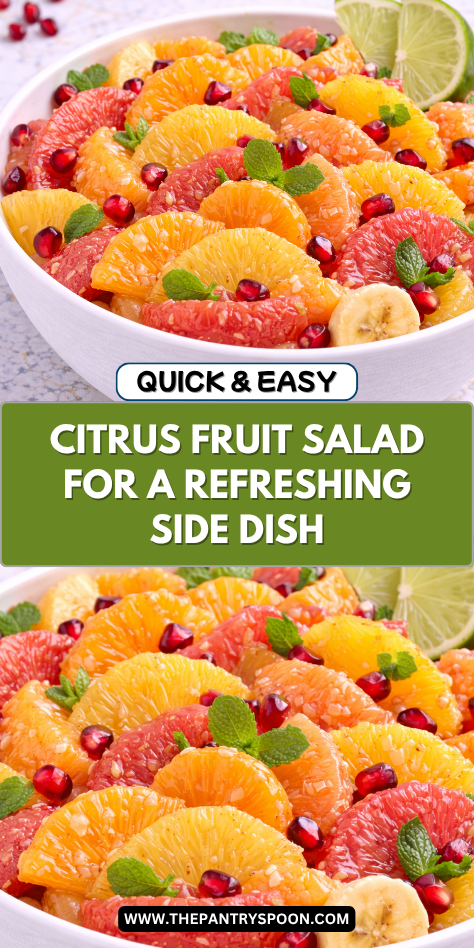
I make Citrus Fruit Salad when I want something bright, fresh, and simple that wakes up the whole table. It is the kind of bowl I reach for when meals feel a little heavy, or when I want a colorful side that tastes clean and refreshing.
The mix of oranges, grapefruit, mandarins, and sweet honey-lime dressing feels light but still special. I love serving it for breakfast, brunch, lunch boxes, holidays, or as a fresh snack because it is easy to make and always feels cheerful without much effort.
Why You’ll Love This Recipe
Citrus Fruit Salad is juicy, colorful, and full of fresh flavor. The different citrus fruits bring a mix of sweet, tart, and lightly tangy tastes that make every bite interesting.
It is also simple to prepare and works well for many meals. You can serve it with breakfast, spoon it over yogurt, bring it to a brunch table, or enjoy it as a light dessert after dinner.
This salad is especially nice for families because it feels fresh and fun without being complicated. The honey-lime dressing softens the tart fruit, while the mint adds a gentle cool flavor that makes the bowl taste bright and balanced.
Serves: 6 people
This Citrus Fruit Salad serves about 6 people as a side dish, snack, or light dessert. The portions are generous enough for a family breakfast or brunch, especially when served with eggs, toast, pancakes, muffins, or yogurt.
If you are serving it as part of a larger holiday meal or buffet, it may stretch to 8 smaller servings. For a party or potluck, you can double the recipe and keep the dressing separate until close to serving time.
Ingredients You’ll Need
For the Citrus Salad
- 3 large navel oranges, peeled and sliced into rounds or segments
- 2 blood oranges, peeled and sliced into rounds or segments
- 2 mandarins or clementines, peeled and separated into segments
- 1 large ruby red grapefruit, peeled and sliced into rounds or segments
- 1 cup fresh pineapple chunks
- 1/2 cup pomegranate seeds
- 1/4 cup thinly sliced red grapes, optional
- 2 tablespoons chopped fresh mint
- 1 tablespoon finely chopped fresh basil, optional
For the Honey-Lime Dressing
- 2 tablespoons fresh lime juice
- 1 tablespoon fresh orange juice
- 1 tablespoon honey
- 1 teaspoon lime zest
- 1/2 teaspoon vanilla extract
- 1/8 teaspoon fine sea salt
For Serving
- 1/4 cup toasted coconut flakes, optional
- 1/4 cup chopped pistachios or sliced almonds, optional
- Plain Greek yogurt, coconut yogurt, or whipped cream, optional
Pro Tips
Use a mix of sweet and tart citrus for the best flavor. Navel oranges and mandarins bring sweetness, while grapefruit and blood oranges add a brighter, tangier taste.
Cut away as much white pith as possible when peeling the citrus. The white part can taste bitter, and removing it makes the salad taste cleaner and sweeter.
Use a sharp knife when slicing citrus into rounds. A sharp knife keeps the fruit neat and helps prevent too much juice from spilling onto the cutting board.
Add the dressing shortly before serving if you want the salad to look its freshest. Citrus can release more juice as it sits, so a shorter rest keeps the bowl bright and pretty.
Taste the fruit before adding the dressing. If your citrus is very sweet, add a little extra lime juice, and if it is tart, add a small extra drizzle of honey.
Add crunchy toppings right before serving. Coconut, pistachios, or almonds can soften if they sit in the fruit juices for too long.
Tools You’ll Need
- Large mixing bowl
- Small mixing bowl
- Whisk
- Sharp knife
- Cutting board
- Measuring spoons
- Measuring cups
- Citrus juicer, optional
- Microplane or zester, optional
- Large spoon or silicone spatula
- Serving platter or serving bowl
- Airtight container for storage
Substitutions and Variations
Use Different Citrus
Swap in cara cara oranges, tangerines, pomelos, or sumo citrus if you find them. A mix of citrus keeps the salad colorful and gives each bite a nice balance of sweet and tart flavor.
Make It Vegan
Use maple syrup or agave instead of honey in the dressing. The salad will still taste lightly sweet, bright, and fresh without changing the main flavor.
Add More Texture
Sprinkle toasted coconut flakes, chopped pistachios, or sliced almonds over the salad right before serving. This adds crunch and makes the salad feel a little more special for brunch or holidays.
Make It Creamier
Serve the citrus salad over plain Greek yogurt, vanilla yogurt, or coconut yogurt. This turns it into a more filling breakfast or snack while keeping the fruit fresh and bright.
Add More Fruit
Mix in sliced strawberries, kiwi, blueberries, or mango for extra color and sweetness. Keep citrus as the main fruit so the salad still tastes clean, juicy, and refreshing.
Make Ahead Tips
Citrus Fruit Salad can be made partly ahead, which makes it helpful for brunch, holidays, meal prep, or busy family mornings. The best approach is to peel and slice the citrus ahead, then add the dressing and toppings closer to serving.
You can prepare the oranges, mandarins, grapefruit, pineapple, and pomegranate seeds up to 1 day ahead. Store them in an airtight container in the refrigerator, and keep any extra juice that collects because it can make the salad taste even better.
The honey-lime dressing can be whisked together up to 3 days ahead. Keep it in a small covered jar or container in the refrigerator, then shake or stir it well before using.
Wait to add fresh mint, basil, toasted coconut, and nuts until just before serving. This keeps the herbs bright and the toppings crisp.
If you want to serve the salad on a platter, arrange the citrus slices a few hours ahead and cover tightly. Add the dressing shortly before serving so the fruit looks fresh and glossy.
Instructions
Step 1: Make the Honey-Lime Dressing
In a small mixing bowl, whisk together 2 tablespoons fresh lime juice, 1 tablespoon fresh orange juice, 1 tablespoon honey, 1 teaspoon lime zest, 1/2 teaspoon vanilla extract, and 1/8 teaspoon fine sea salt.
Whisk until the honey blends fully into the citrus juice. The dressing should look light, glossy, and smooth.
Taste the dressing before adding it to the fruit. Add a few extra drops of lime juice if you want more brightness, or a tiny drizzle of honey if your citrus is very tart.
Step 2: Peel the Citrus
Use a sharp knife to trim the top and bottom from 3 large navel oranges, 2 blood oranges, and 1 large ruby red grapefruit. Place each fruit flat on the cutting board and slice downward along the curve to remove the peel and white pith.
Try to remove as much white pith as possible without taking away too much fruit. This helps the salad taste sweet and clean instead of bitter.
Peel 2 mandarins or clementines by hand and separate them into segments. Remove any large strings of pith so the pieces look neat and easy to eat.
Step 3: Slice or Segment the Fruit
Slice the peeled navel oranges, blood oranges, and grapefruit into thin rounds or cut them into bite-size segments. Choose rounds if you want a pretty platter, or segments if you want an easy spoonable salad.
If you slice the fruit into rounds, remove any seeds you find. If you segment the fruit, work over a bowl to catch the juice.
Keep the pieces fairly even so the salad is easy to serve. The mix of orange, red, pink, and golden fruit makes the bowl bright and inviting.
Step 4: Add Pineapple and Pomegranate
Place the prepared citrus in a large mixing bowl or on a serving platter. Add 1 cup fresh pineapple chunks and 1/2 cup pomegranate seeds.
The pineapple adds extra sweetness, while the pomegranate seeds bring a little pop in each bite. Together, they make the salad feel colorful and special without much extra work.
If using 1/4 cup thinly sliced red grapes, add them now. They bring another sweet, juicy texture that works well with the tart citrus.
Step 5: Dress the Fruit
Pour the honey-lime dressing over the citrus, pineapple, pomegranate seeds, and grapes if using. Use a large spoon or silicone spatula to fold everything gently.
Move slowly so the citrus slices do not break apart. If you arranged the fruit on a platter, drizzle the dressing evenly over the top instead of tossing.
Let the salad sit for 10 to 15 minutes before serving if you have time. This short rest helps the flavors blend while keeping the fruit fresh.
Step 6: Add Fresh Herbs
Sprinkle 2 tablespoons chopped fresh mint over the salad. Add 1 tablespoon finely chopped fresh basil if using.
The mint gives the salad a cool, fresh finish. The basil adds a soft herbal note that pairs nicely with citrus and pineapple.
Add the herbs close to serving time so they stay bright. If they sit too long in the juice, they can darken and lose some of their fresh flavor.
Step 7: Add Toppings and Serve
Right before serving, sprinkle 1/4 cup toasted coconut flakes over the salad if using. You can also add 1/4 cup chopped pistachios or sliced almonds for crunch.
Serve the salad in a large bowl or on a platter. If you want a creamier dish, spoon it over plain Greek yogurt, coconut yogurt, or a little whipped cream.
Serve chilled or slightly cool from the refrigerator. Citrus Fruit Salad tastes best when the fruit is juicy, the herbs are fresh, and the toppings are added at the last minute.
Serving Suggestions
Citrus Fruit Salad is lovely with breakfast because it feels light and refreshing. Serve it with scrambled eggs, toast, muffins, pancakes, waffles, or a bowl of oatmeal.
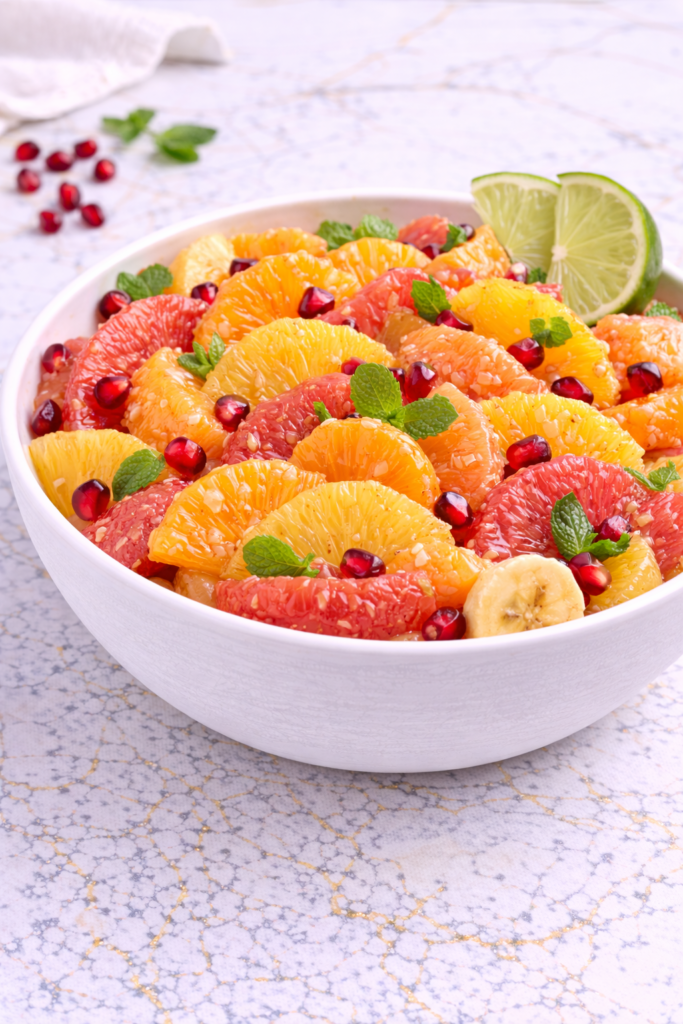
For brunch, arrange the fruit on a large platter so the colors can show. The bright oranges, pink grapefruit, blood oranges, and pomegranate seeds make the table feel fresh and welcoming.
You can spoon the salad over Greek yogurt or coconut yogurt for an easy snack or breakfast bowl. The creamy yogurt balances the tart citrus and makes the dish more filling.
It also works well as a side dish for holiday meals. The juicy citrus helps balance richer foods like casseroles, roasted meats, creamy potatoes, and baked dishes.
For lunch boxes, pack the fruit salad in a small sealed container and keep toppings separate. Add coconut or nuts right before eating so they stay crisp.
As a light dessert, serve the citrus with whipped cream, vanilla yogurt, or a small scoop of sorbet. The fruit keeps the dessert fresh while still feeling sweet and satisfying.
Leftovers and Storage
Store leftover Citrus Fruit Salad in an airtight container in the refrigerator for up to 2 days. The fruit will release more juice as it sits, but it will still taste fresh and bright.
Stir leftovers gently before serving. If there is a lot of juice at the bottom, use a slotted spoon or serve the juice over yogurt, oatmeal, or pancakes.
Keep crunchy toppings separate from the salad if you know you will have leftovers. Coconut flakes, pistachios, and almonds can soften quickly in the citrus juice.
The herbs may darken after a day, so add fresh mint or basil when serving leftovers. A little extra lime zest can also help the salad taste fresh again.
Do not freeze this fruit salad. Citrus becomes soft and watery after thawing, and the texture will not be the same.
Nutrition and Benefits
- Full of vitamin C: Oranges, grapefruit, mandarins, and lime juice are naturally rich in vitamin C. This makes the salad a bright and fresh choice for breakfast, snacks, or sides.
- Naturally hydrating: Citrus fruit and pineapple contain plenty of water. The salad feels juicy and refreshing without needing a heavy dressing.
- Colorful and inviting: Blood oranges, grapefruit, pomegranate seeds, and pineapple bring a mix of colors to the bowl. This makes the salad appealing for kids and pretty enough for guests.
- Lightly sweetened: The dressing uses a small amount of honey to balance tart fruit. Most of the sweetness comes from the fruit itself.
- Easy to pair: Citrus Fruit Salad works with breakfast, brunch, holiday meals, lunch boxes, and light desserts. It adds freshness to the table without much prep.
Recipe FAQ
Can I make Citrus Fruit Salad ahead of time?
Yes, you can prepare the fruit up to 1 day ahead. Store it covered in the refrigerator and add the dressing, herbs, and toppings closer to serving. This keeps the fruit fresh and the toppings crisp.
What citrus works best for this salad?
Navel oranges, blood oranges, mandarins, and ruby red grapefruit work very well together. They give a mix of sweet, tart, and bright flavors. Cara cara oranges, tangerines, and pomelos can also be used.
How do I keep citrus salad from tasting bitter?
Remove as much white pith as possible when peeling the fruit. The pith can taste bitter, especially on grapefruit and oranges. A little honey in the dressing also helps balance tart or bitter notes.
Can I use canned citrus?
Fresh citrus gives the best texture and flavor, but canned mandarin oranges can be used as a shortcut. Drain them well before adding them to the salad. Avoid canned fruit in heavy syrup if you want the salad to stay light.
Can I make this salad without honey?
Yes, you can use maple syrup or agave instead of honey. Both work well in the lime dressing and keep the salad lightly sweet. You can also leave sweetener out if your fruit is very sweet.
What can I serve with Citrus Fruit Salad?
It pairs well with eggs, toast, yogurt, pancakes, waffles, muffins, roasted meats, and holiday dishes. It also works as a fresh dessert with whipped cream or sorbet. The bright flavor balances rich or savory foods nicely.
How long does Citrus Fruit Salad last?
It lasts up to 2 days in an airtight container in the refrigerator. The fruit will soften slightly and release more juice over time. For the best texture, eat it the day it is made or the next day.
A Bright Bowl to Freshen the Table
Citrus Fruit Salad is a simple, colorful recipe that brings fresh flavor to any meal. It is juicy, light, and easy to make with sweet oranges, tart grapefruit, pineapple, pomegranate, and a gentle honey-lime dressing.
It works for breakfast, brunch, lunch boxes, holidays, and simple snacks because it feels clean and dependable. With its bright colors and refreshing taste, this is a fruit salad worth making again whenever the table needs something fresh.