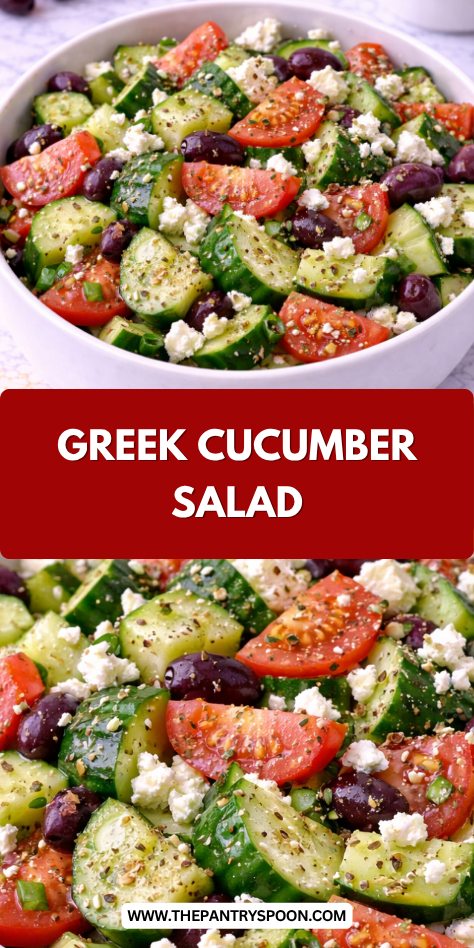
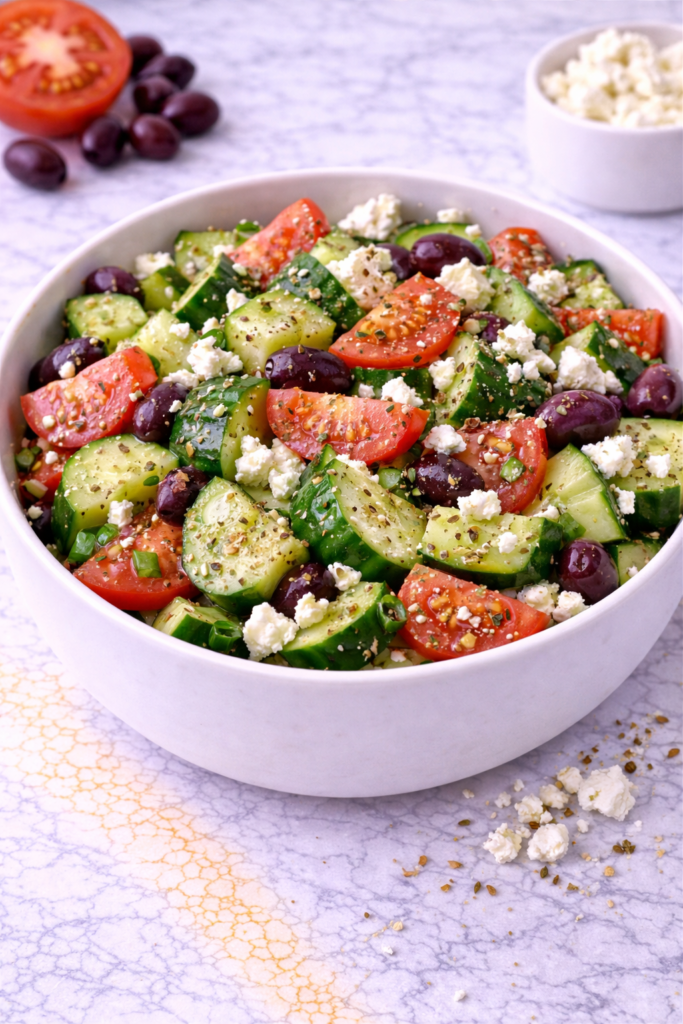
I used to make Greek salad with lettuce and store-bought dressing until I learned that’s not how it’s actually done in Greece. A real horiatiki is just chunky tomatoes, cucumbers, onions, olives, and feta with good olive oil and oregano—no lettuce, no fuss.
I’ll walk you through how to chop everything into big, satisfying pieces and dress it simply so the vegetables actually taste like something.
It’s refreshing, takes about ten minutes, and works as a side dish or a light meal on its own.
Why You’ll Love This Recipe
This Greek salad is all about fresh, bold flavors that don’t need much to shine. The natural sweetness of the tomatoes pairs beautifully with the saltiness of olives and feta, creating a simple but satisfying balance. It’s a dish that feels light yet complete.
It’s also incredibly easy to prepare, making it perfect for busy days or last-minute meals. With no complicated steps or cooking required, you can have a fresh and flavorful dish ready in minutes. It’s a reliable option you can turn to anytime.
Another reason to love this recipe is its versatility. You can serve it as a side, a light meal, or even pair it with other dishes. This Greek salad fits easily into a variety of occasions and preferences.
Serves: 4 people
This recipe makes four servings, perfect as a side dish or light main. The portions are refreshing and can be adjusted as needed.
Ingredients You’ll Need
For the Salad:
- 3 cups tomatoes, chopped
- 1 cucumber, sliced
- 1/2 red onion, thinly sliced
- 1/2 cup Kalamata olives
- 1/2 cup feta cheese, cut into chunks
For the Dressing:
- 3 tablespoons olive oil
- 1 tablespoon red wine vinegar
- 1/2 teaspoon dried oregano
- 1/4 teaspoon salt
- 1/4 teaspoon black pepper
Pro Tips
Use ripe, high-quality tomatoes for the best flavor. This makes a noticeable difference. It enhances the salad.
Slice the vegetables evenly for a balanced texture. This improves the overall experience. It keeps everything consistent.
Use block feta instead of crumbled for a more traditional presentation. This adds authenticity. It improves texture.
Add the dressing just before serving to keep the vegetables crisp. This prevents sogginess. It keeps the salad fresh.
Adjust the seasoning to your taste. This keeps the recipe flexible. It allows customization.
Serve slightly chilled or at room temperature for the best flavor. This enhances the natural taste of the ingredients.
Tools You’ll Need
- Large mixing bowl
- Knife
- Cutting board
- Measuring spoons
- Serving spoon
Substitutions and Variations
You can use cherry tomatoes instead of larger ones. This adds a slightly sweeter flavor. It works well.
If you prefer a milder onion flavor, soak the slices in water before adding. This reduces sharpness. It improves balance.
For a different twist, you can add bell peppers or capers. This adds variety. It enhances the dish.
You can also adjust the dressing by adding lemon juice instead of vinegar. This changes the flavor slightly. It keeps it fresh.
If you want a dairy-free version, omit the feta cheese. The salad will still be flavorful. It remains satisfying.
Make Ahead Tips
This Greek salad is best enjoyed fresh, but you can still prepare parts of it ahead to save time. You can chop the tomatoes, cucumber, and onion a few hours in advance and store them separately in the refrigerator. This helps keep everything crisp.
You can also prepare the dressing ahead of time and store it in a sealed container. Shake or stir before using. This makes assembly quick and easy.
For best results, combine the salad and dressing just before serving. This keeps the vegetables fresh and prevents excess moisture. It improves the overall texture.
Instructions
Step 1: Prepare the Vegetables
Wash and chop the tomatoes into bite-sized pieces. Slice the cucumber and thinly slice the red onion. This creates the base of the salad.
Step 2: Combine Ingredients
In a large mixing bowl, add the tomatoes, cucumber, onion, and Kalamata olives. Gently toss to combine. This distributes the ingredients evenly.
Step 3: Add the Feta
Place the feta cheese on top of the salad, either in chunks or a large block. This keeps the presentation traditional. It enhances texture.
Step 4: Prepare the Dressing
In a small bowl, whisk together the olive oil, red wine vinegar, oregano, salt, and black pepper. Mix until well combined. This creates the dressing.
Step 5: Dress the Salad
Drizzle the dressing over the salad just before serving. This keeps the vegetables crisp. It enhances flavor.
Step 6: Toss Lightly
Gently toss the salad to coat the ingredients with the dressing. Be careful not to break the feta too much. This keeps the texture intact.
Step 7: Adjust Seasoning
Taste the salad and adjust salt, pepper, or vinegar if needed. This helps balance the flavors. It completes the dish.
Step 8: Rest Briefly
Let the salad sit for a few minutes before serving. This allows the flavors to blend. It improves the taste.
Step 9: Serve Fresh
Serve the salad fresh as a side or light main dish. Enjoy the vibrant and refreshing flavors.
Step 10: Enjoy
Enjoy the simple yet bold flavors of this traditional Greek salad. It’s ready to enjoy.
Serving Suggestions
This Greek salad pairs beautifully with grilled meats, seafood, or plant-based dishes. The fresh ingredients balance richer foods. It creates a complete meal.
It also works well as a light lunch with warm bread or pita. This adds a satisfying element. It keeps the meal simple.
For a refreshing option, serve it alongside other Mediterranean dishes. This creates variety. It enhances the dining experience.
Leftovers and Storage
Store leftover Greek salad in an airtight container in the refrigerator for up to 2 days. Keep in mind that the vegetables may release moisture over time. This can slightly change the texture.
If possible, store the dressing separately and add it when serving. This helps maintain freshness. It improves the result.
Stir gently before serving leftovers to redistribute flavors. This helps refresh the salad. It keeps it enjoyable.
Nutrition and Benefits
- Fresh vegetables provide vitamins, minerals, and hydration, making this salad a nourishing option. They support a balanced diet.
- Olive oil adds healthy fats and enhances the flavor of the dish. It contributes to overall wellness.
- Feta cheese provides protein and richness, balancing the freshness of the vegetables. It adds depth.
- The simple ingredient list keeps the dish light and easy to digest. It fits into many dietary preferences.
- This salad offers a refreshing and wholesome option for everyday meals. It’s both satisfying and nutritious.
Recipe FAQ
Can I make this salad ahead of time?
Yes, but it’s best to add the dressing just before serving. This keeps the vegetables crisp.
What type of tomatoes work best?
Ripe, juicy tomatoes are ideal for the best flavor. Choose fresh and high-quality ones.
Can I use a different cheese?
Feta is traditional, but you can substitute with another cheese if needed. The flavor will change slightly.
How do I reduce the sharpness of the onion?
Soak the sliced onion in cold water for a few minutes. This helps mellow the flavor.
Can I add more vegetables?
Yes, bell peppers or cucumbers can be added. This enhances texture and flavor.
Is this salad gluten-free?
Yes, the ingredients are naturally gluten-free. It fits many dietary needs.
How long does it stay fresh?
It’s best enjoyed within 1 to 2 days. After that, the texture may change.
A Fresh and Timeless Dish You’ll Enjoy Again and Again
This Greek salad (traditional horiatiki recipe) is a simple way to bring fresh, vibrant flavor into your daily routine. It combines crisp vegetables, briny olives, and creamy feta into a dish that feels both refreshing and satisfying.
Whether you’re serving it as a side or enjoying it as a light meal, this recipe fits naturally into real life. With simple preparation and flexible ingredients, it’s one you can come back to again and again.