I make marinara sauce when I want something simple, warm, and useful for more than one meal. A pot of tomatoes, garlic, olive oil, and herbs can turn a busy evening into an easy dinner without much fuss.
This is one of those recipes I like to keep in my back pocket because it works with so many family favorites. It tastes fresh and comforting, and it gives pasta, meatballs, pizza, baked dishes, and simple weeknight meals a homemade flavor that feels dependable.
Why You’ll Love This Recipe
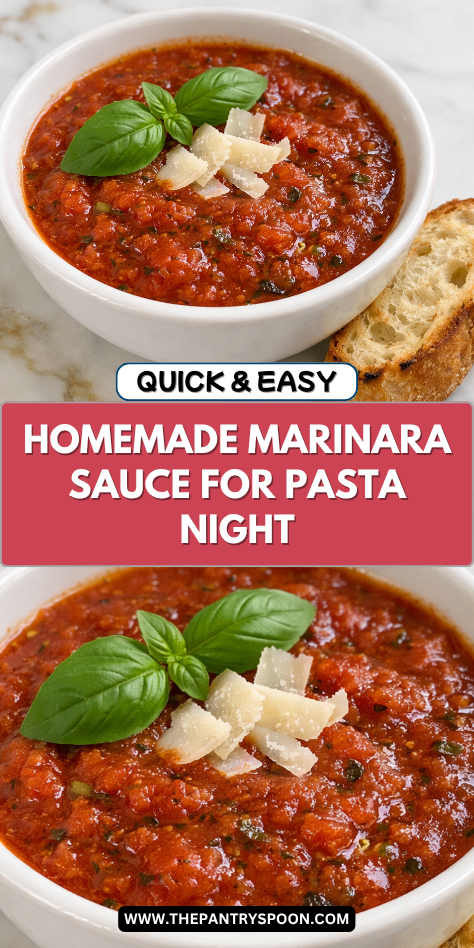
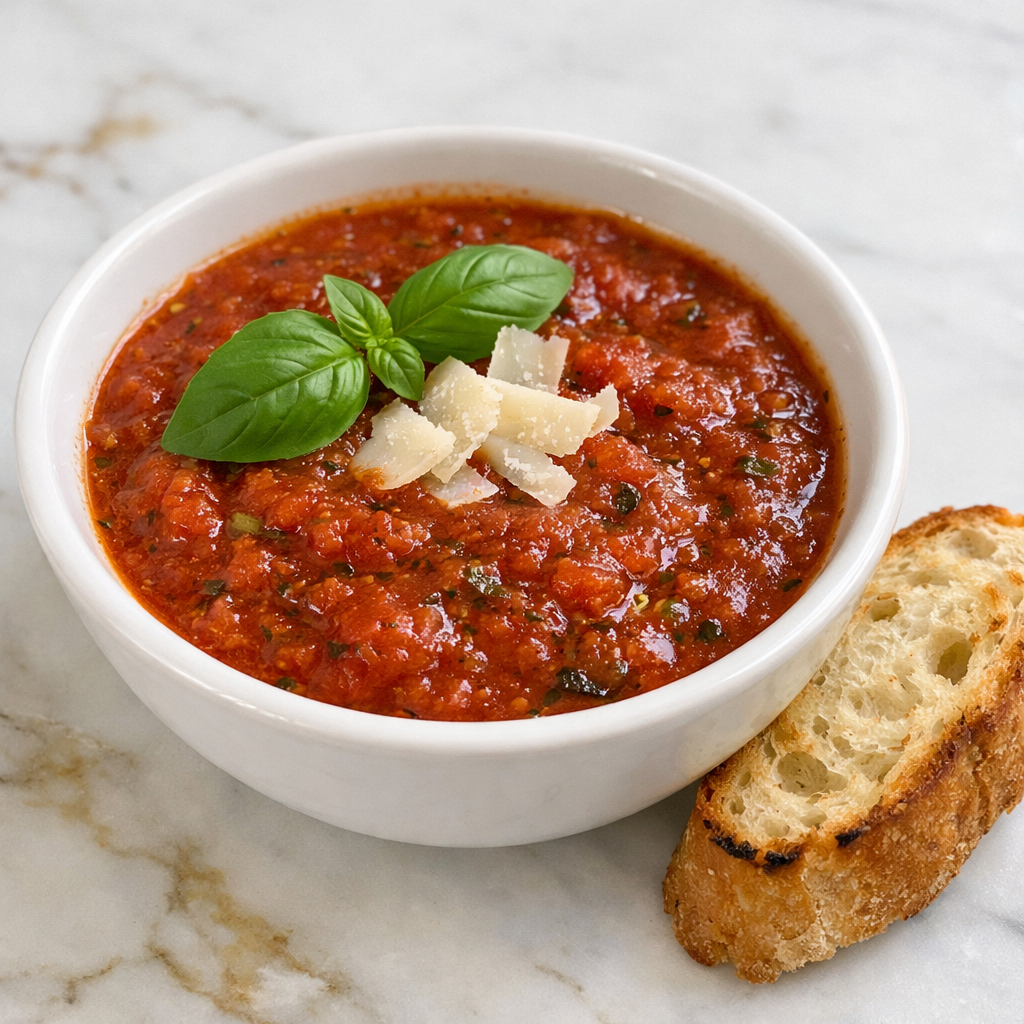
Marinara sauce is rich, bright, and full of simple tomato flavor. It does not need a long list of ingredients, but a little garlic, onion, olive oil, basil, and oregano help it taste warm and balanced.
This recipe is easy enough for beginners because the steps are simple and forgiving. You sauté the aromatics, add the tomatoes, let the sauce simmer, and taste as you go until it feels just right.
Families love marinara sauce because it can be used in so many ways. It is perfect for spaghetti night, homemade pizza, dipping breadsticks, spooning over chicken parmesan, or freezing in small portions for later.
Serves: 8 people
This recipe makes about 4 cups of marinara sauce, which serves around 8 people when spooned over pasta or used as a topping. If you are using it as a dip or pizza sauce, the number of servings may change, but it is easy to double for meal prep or a larger family dinner.
Ingredients You’ll Need
For the Marinara Sauce
- 2 tablespoons olive oil
- 1 small yellow onion, finely diced
- 4 garlic cloves, minced
- 2 tablespoons tomato paste
- 2 cans crushed tomatoes, 28 ounces each
- 1 teaspoon granulated sugar, optional
- 1 teaspoon kosher salt, plus more to taste
- ½ teaspoon black pepper
- 1 teaspoon dried oregano
- ½ teaspoon dried basil
- ¼ teaspoon crushed red pepper flakes, optional
- 1 tablespoon balsamic vinegar, optional
- ¼ cup fresh basil leaves, chopped
- 1 tablespoon fresh parsley, chopped, optional
Optional Add-Ins for More Flavor
- 1 tablespoon unsalted butter, stirred in at the end
- 1 Parmesan cheese rind, simmered in the sauce
- ½ teaspoon garlic powder, for extra garlic flavor
- ¼ cup grated Parmesan cheese, stirred in before serving
Pro Tips
Use good canned tomatoes because they are the main ingredient. Crushed tomatoes make the sauce smooth but still hearty, while whole peeled tomatoes can be crushed by hand if you like a more rustic texture.
Cook the onion until it is soft before adding the garlic. Onion needs a little more time to become sweet and tender, while garlic can burn quickly if it sits in hot oil too long.
Let the tomato paste cook for a minute or two before adding the crushed tomatoes. This deepens the flavor and helps the sauce taste less flat.
Simmer the sauce gently, not aggressively. A low simmer lets the flavors blend without making the tomatoes taste harsh or causing the sauce to splatter all over the stove.
Taste near the end before adding extra salt or sugar. Some canned tomatoes are sweeter than others, so a small pinch of sugar may help balance acidity, but it is not always needed.
Add fresh basil at the end so it stays bright. If basil cooks too long, it can lose its fresh flavor and turn darker in the sauce.
Tools You’ll Need
- Large saucepan or Dutch oven
- Cutting board
- Sharp knife
- Garlic press or microplane, optional
- Measuring cups
- Measuring spoons
- Wooden spoon
- Can opener
- Ladle
- Immersion blender, optional
- Airtight storage containers or freezer-safe jars
Substitutions and Variations
Use Whole Peeled Tomatoes
Use 2 cans of whole peeled tomatoes instead of crushed tomatoes if you like a more rustic marinara sauce. Crush them by hand or with a spoon as they simmer, then blend the sauce if you want it smoother.
Make It Spicy
Add extra crushed red pepper flakes or a pinch of cayenne pepper for a little heat. Start small so the sauce stays family-friendly, then add more to the adult portions if needed.
Make It Sweeter
Add 1 teaspoon of sugar, honey, or grated carrot if your tomatoes taste too acidic. Grated carrot melts into the sauce as it cooks and adds natural sweetness without making the sauce taste sugary.
Add More Vegetables
Stir in finely diced bell pepper, mushrooms, zucchini, or carrots after the onion softens. Keep the pieces small so the sauce still feels like classic marinara and works well with pasta or pizza.
Make It Creamier
Stir in 1 tablespoon of butter or a splash of heavy cream at the end. This softens the tomato flavor and makes the sauce taste richer while still keeping the marinara base recognizable.
Make Ahead Tips
Marinara sauce is one of the best recipes to make ahead because the flavor gets even better as it rests. I often make a pot on the weekend, let it cool, and keep it in the refrigerator for quick pasta nights, pizza, meatball subs, or baked dinners during the week.
You can make the sauce up to 4 days ahead and store it in airtight containers. Let it cool before covering, then refrigerate it until you are ready to use it.
For longer storage, freeze the sauce in meal-size portions. I like using 1-cup or 2-cup containers because they thaw faster and make it easy to grab just what I need.
You can also prep the onion and garlic ahead of time. Dice the onion and mince the garlic, then store them separately in the refrigerator for up to 1 day before cooking.
If you plan to freeze the sauce, leave out fresh basil until reheating if possible. Stirring fresh herbs in after thawing gives the sauce a brighter, fresher taste.
Instructions
Step 1: Warm the Olive Oil
Place a large saucepan or Dutch oven over medium heat. Add 2 tablespoons olive oil and let it warm until it looks glossy, but not smoking.
A heavy pot is helpful because it keeps the heat steady while the sauce simmers. This also helps prevent the tomatoes from scorching on the bottom.
Step 2: Cook the Onion
Add 1 small finely diced yellow onion to the warm oil. Cook for 5 to 7 minutes, stirring often, until the onion looks soft and translucent.
Do not rush this step. Soft onion gives the sauce a gentle sweetness and helps build a smooth, balanced flavor.
Step 3: Add the Garlic and Tomato Paste
Stir in 4 minced garlic cloves and cook for about 30 seconds, just until fragrant. Add 2 tablespoons tomato paste and stir it into the onion and garlic.
Cook the tomato paste for 1 to 2 minutes. It should darken slightly and smell rich, which helps the finished marinara sauce taste deeper.
Step 4: Add the Tomatoes and Seasonings
Pour in 2 cans crushed tomatoes, 28 ounces each. Stir in 1 teaspoon kosher salt, ½ teaspoon black pepper, 1 teaspoon dried oregano, ½ teaspoon dried basil, and ¼ teaspoon crushed red pepper flakes if using.
Add 1 teaspoon granulated sugar if your tomatoes taste very sharp or acidic. Stir everything well so the tomato paste blends fully into the crushed tomatoes.
Step 5: Simmer the Sauce
Bring the sauce to a gentle simmer, then reduce the heat to low. Let it simmer uncovered for 25 to 35 minutes, stirring every few minutes.
The sauce should thicken slightly and smell rich and warm. If it splatters, lower the heat and partially cover the pot with a lid.
Step 6: Taste and Balance
Taste the marinara sauce near the end of cooking. Add more salt if it tastes flat, a pinch of sugar if it tastes too acidic, or a little more crushed red pepper if you want heat.
If using 1 tablespoon balsamic vinegar, stir it in now. It adds a light sweetness and depth without making the sauce taste like vinegar.
Step 7: Add Fresh Herbs
Turn off the heat and stir in ¼ cup chopped fresh basil leaves. Add 1 tablespoon chopped fresh parsley if you are using it.
Fresh herbs taste best at the end because they stay brighter and more fragrant. Stir gently so they spread through the sauce without overcooking.
Step 8: Blend If Desired
For a smoother sauce, use an immersion blender directly in the pot. Blend in short bursts until the marinara reaches your preferred texture.
You can also leave the sauce chunky if your family likes more texture. Both versions work well for pasta, pizza, dipping, and baked dishes.
Step 9: Serve or Store
Use the marinara sauce right away, or let it cool for storage. Spoon it over cooked pasta, spread it on pizza dough, or serve it as a dipping sauce with breadsticks.
If storing, cool the sauce until it is no longer steaming. Transfer it to airtight containers and refrigerate or freeze.
Serving Suggestions
Serve marinara sauce over spaghetti, penne, rigatoni, or your family’s favorite pasta. Add grated Parmesan, fresh basil, and a drizzle of olive oil for a simple dinner that always feels comforting.
Use it as a sauce for homemade pizza or flatbread. Spread a thin layer over the crust, add cheese and toppings, then bake until bubbly and golden.
Spoon the sauce over meatballs, chicken parmesan, eggplant parmesan, or baked chicken. The bright tomato flavor works well with crispy, cheesy, or savory main dishes.
Serve it as a warm dip for breadsticks, garlic knots, mozzarella sticks, or toasted ravioli. This is a fun option for family movie night or a casual snack dinner.
Layer marinara sauce into baked pasta dishes like lasagna, stuffed shells, baked ziti, or manicotti. It adds moisture, flavor, and that classic tomato base everyone recognizes.
Use it in quick lunches like meatball subs, pizza bagels, or grilled cheese dipping cups. A little container of warm sauce can make simple leftovers feel fresh again.
Leftovers and Storage
Let leftover marinara sauce cool before storing it. It should be warm or room temperature, but not steaming, when it goes into the refrigerator.
Store the sauce in airtight containers or glass jars in the refrigerator for up to 4 days. Use clean spoons when serving from the container so the sauce stays fresh.
To reheat, pour the sauce into a small saucepan and warm it over medium-low heat. Stir often until it is hot, adding a splash of water if it has thickened too much in the refrigerator.
You can also reheat single servings in the microwave. Use a microwave-safe bowl, cover loosely, and heat in short bursts while stirring between each one.
Marinara sauce freezes very well. Freeze it in freezer-safe containers or bags for up to 3 months, leaving a little room for expansion. Thaw overnight in the refrigerator, then reheat gently on the stove.
Nutrition and Benefits
- Tomato-rich and flavorful: Marinara sauce is built around crushed tomatoes, which bring bright flavor, color, and natural sweetness. Tomatoes also give the sauce a comforting base without needing many heavy ingredients.
- Simple pantry ingredients: Olive oil, onion, garlic, tomato paste, canned tomatoes, and dried herbs are easy to keep on hand. This makes the sauce practical for busy nights when you still want something homemade.
- Easy to make lighter or richer: The sauce is naturally light if you keep it simple. You can also stir in butter, Parmesan, or cream when you want a softer, richer flavor.
- Family-friendly and flexible: Marinara works with pasta, pizza, meatballs, vegetables, and casseroles. That makes it helpful for families with different tastes at the table.
- Freezer-friendly: A batch of sauce can be frozen in small portions for future meals. This helps save time and makes weeknight cooking feel easier.
Recipe FAQ
Can I use fresh tomatoes for marinara sauce?
Yes, you can use fresh tomatoes, but the sauce may take longer to cook down. Peel and chop ripe tomatoes, then simmer until they break down and thicken. Canned tomatoes are often easier because they give steady flavor all year.
How do I make marinara sauce less acidic?
Add a small pinch of sugar, a spoonful of grated carrot, or a splash of balsamic vinegar. Let the sauce simmer gently so the flavors can soften. Taste before adding more because a little sweetness goes a long way.
Can I make marinara sauce without onion?
Yes, you can leave out the onion if needed. Use extra garlic or a pinch of garlic powder for more flavor. The sauce will be a little lighter, but it will still taste good.
Should marinara sauce be blended?
Blending is optional and depends on the texture your family likes. Use an immersion blender for a smooth sauce, or leave it chunky for a rustic feel. Both textures work well for pasta and dipping.
Can I double this recipe?
Yes, this recipe doubles very well. Use a larger pot so the sauce has room to simmer without spilling. You may need to add a little extra simmering time so the larger batch thickens properly.
What is the difference between marinara and pasta sauce?
Marinara is usually a simpler tomato sauce made with tomatoes, garlic, onion, olive oil, and herbs. Pasta sauce can include meat, cream, extra vegetables, or a longer cooking time. Marinara is often lighter and quicker.
Can I use marinara sauce for pizza?
Yes, marinara sauce works well on pizza. If it seems thin, simmer it a little longer so it thickens before spreading it on the dough. Use a light layer so the crust does not become soggy.
A Simple Sauce That Makes Dinner Easier
Homemade marinara sauce is one of those recipes that brings comfort to the table without making dinner feel hard. It is warm, simple, and dependable, with a fresh tomato flavor that works for pasta, pizza, dipping, and family meals.
I love keeping a batch ready because it turns basic ingredients into something useful and satisfying. With a little simmering and a few pantry staples, this sauce becomes a recipe worth making again for busy nights and cozy dinners.