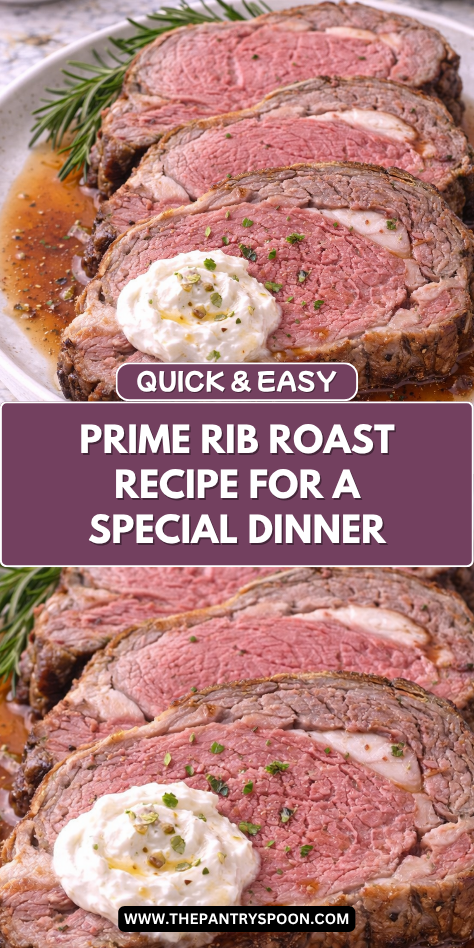
I make Prime Rib Roast when I want a meal that feels special but still dependable to prepare at home. The rich beef, crisp seasoned crust, and tender center always make the table feel like a celebration.
I love that it brings people together for holidays, birthdays, and family dinners without needing complicated steps. Once it goes into the oven, most of the work is already done. It is one of those classic meals I trust every time.
Why You’ll Love This Recipe
Prime Rib Roast is known for its rich flavor, tender texture, and beautiful presentation. It feels impressive when served, yet the cooking process is simpler than many people expect.
This recipe uses basic seasonings that allow the natural flavor of the beef to shine. Garlic, herbs, salt, and pepper create a savory crust while the inside stays juicy and tender.
Another reason to love it is how well it fits special gatherings. Prime Rib Roast feeds a crowd, slices beautifully, and creates a memorable meal that feels worth the occasion.
Serves: 8 people
This recipe serves about 8 people depending on roast size and portion preference. If serving many side dishes, it may stretch a little farther.
Ingredients You’ll Need
For the Roast
- 1 (5 to 6 pound) bone-in prime rib roast
- 2 tablespoons kosher salt
- 1 tablespoon black pepper
- 1 tablespoon garlic powder
- 4 garlic cloves, minced
- 2 tablespoons chopped fresh rosemary
- 2 tablespoons chopped fresh thyme
- 3 tablespoons olive oil
- 2 tablespoons softened unsalted butter
Optional for Serving
- Prepared horseradish sauce
- Au jus or pan drippings
- Fresh herbs for garnish
Pro Tips
Bring the roast closer to room temperature.
Let the roast sit out for 1 to 2 hours before cooking. This helps it cook more evenly from edge to center.
Season generously.
A large roast needs enough salt and seasoning to flavor every slice. Do not be shy with the crust.
Use a meat thermometer.
This is the easiest way to cook prime rib accurately. It helps avoid overcooking an expensive cut.
Rest before slicing.
Allowing the roast to rest after cooking keeps juices in the meat. Slicing too soon can dry it out.
Slice against the grain.
Cutting against the grain helps each slice stay tender and easier to chew.
Save the drippings.
Pan drippings can be turned into au jus or gravy for extra flavor at the table.
Tools You’ll Need
- Roasting pan
- Rack for roasting pan
- Meat thermometer
- Cutting board
- Sharp carving knife
- Small bowl for seasoning mixture
- Spoon or brush
- Aluminum foil
- Tongs
Substitutions and Variations
Use Boneless Prime Rib
A boneless roast works very well and is easier to carve. Cooking time may vary slightly.
Change the Herbs
Use sage, parsley, or oregano in place of rosemary or thyme. Fresh herbs give the best flavor.
Make a Mustard Crust
Rub the roast with Dijon mustard before adding the seasonings. It adds extra depth and helps the crust stick.
Use Compound Butter
Mix softened butter with garlic and herbs, then spread it over the roast. This creates a rich finish.
Add Peppercorn Flavor
Use cracked mixed peppercorns instead of plain black pepper for a bolder crust.

Make Ahead Tips
Prime Rib Roast is a wonderful main dish to plan ahead, especially for holidays and family gatherings. I often season the roast the night before and let it rest uncovered in the refrigerator so the salt and herbs have time to flavor the meat.
This overnight seasoning step can also help dry the surface slightly, which encourages a better crust during roasting. Place the roast on a tray or rack and keep it loosely covered if needed.
On cooking day, remove the roast from the refrigerator 1 to 2 hours before roasting. This helps the center warm slightly so the meat cooks more evenly.
You can also prepare any sauces, horseradish cream, or side dishes in advance while the roast rests. That makes serving much smoother once it is time to carve.
Leftover prime rib stores very well, so making a slightly larger roast can be worthwhile. It creates excellent sandwiches, hashes, and next-day dinners.
Instructions
Step 1: Bring the Roast to Room Temperature
Remove the prime rib roast from the refrigerator 1 to 2 hours before cooking. Place it on the counter so it can lose some of the chill.
Step 2: Preheat the Oven
Preheat your oven to 450°F. Set a rack inside a roasting pan to allow air to circulate around the roast.
Step 3: Make the Seasoning Paste
In a small bowl, combine kosher salt, black pepper, garlic powder, minced garlic, rosemary, thyme, olive oil, and softened butter. Mix until it forms a spreadable paste.
Step 4: Season the Roast
Pat the roast dry with paper towels. Rub the seasoning mixture all over the surface of the roast, covering the top and sides evenly.
Step 5: Start with High Heat
Place the roast bone-side down or fat-side up on the rack. Roast at 450°F for 20 minutes to begin building a flavorful crust.
Step 6: Lower the Temperature
Reduce oven temperature to 325°F without opening the door for long. Continue roasting until the internal temperature reaches your preferred doneness.
Step 7: Check for Doneness
Use a meat thermometer inserted into the thickest part of the roast. Remove at 120°F for rare, 125°F for medium-rare, or 130°F for medium.
Step 8: Rest the Roast
Transfer the roast to a carving board and loosely tent with foil. Let it rest for 20 to 30 minutes before slicing.
Step 9: Slice and Serve
Carve into thick or thin slices, cutting against the grain. Serve with pan juices, horseradish sauce, or your favorite sides.
Serving Suggestions
I love serving Prime Rib Roast with creamy mashed potatoes and roasted vegetables. The rich meat pairs beautifully with simple, comforting sides.
Yorkshire pudding is another classic option that feels perfect for a special dinner. It soaks up pan juices wonderfully.
For a fresh contrast, add a crisp green salad with a light vinaigrette. The freshness balances the richness of the roast.
Serve with horseradish sauce or a simple au jus for extra flavor at the table. Guests can choose the finish they enjoy most.
Dinner rolls or crusty bread are always welcome alongside prime rib. They are especially good for catching extra juices on the plate.
Leftover slices make incredible sandwiches with arugula and horseradish mayo the next day. I often plan for extras on purpose.
Leftovers and Storage
Allow leftover prime rib to cool before storing. Wrap slices tightly or place them in airtight containers.
Refrigerate leftovers for up to 4 days. Keep any juices with the meat if possible to help it stay moist.
To reheat, warm slices gently in a skillet with a little broth or au jus over low heat. This helps prevent overcooking.
You can also reheat in a low oven wrapped in foil with a splash of broth. Avoid high heat, which can dry the meat quickly.
Prime rib can be frozen for up to 2 months. Wrap portions tightly and thaw overnight in the refrigerator before reheating.
Leftovers are excellent in sandwiches, breakfast hash, pasta dishes, or salads. It is a very versatile roast to enjoy again.
Nutrition and Benefits
- Prime rib provides high-quality protein that helps make meals satisfying and filling.
- Beef contains iron, zinc, and B vitamins that support overall nutrition.
- Serving with vegetables and balanced sides creates a complete special-occasion meal.
- A little goes a long way because the meat is rich and flavorful.
- Leftovers can be reused in multiple meals, helping reduce waste.
Recipe FAQ
How long does prime rib take to cook?
Cooking time depends on roast size and desired doneness. A 5 to 6 pound roast often takes around 1 hour 30 minutes to 2 hours total. Always use internal temperature as your guide.
What is the best doneness for prime rib?
Many people prefer medium-rare because it stays tender and juicy. Remove the roast around 125°F for medium-rare before resting.
Do I need to sear prime rib first?
Not separately. Starting at high oven heat creates a flavorful crust, then lowering the temperature finishes the roast gently.
Should I cook it covered or uncovered?
Prime rib is usually roasted uncovered. This allows the outside to brown and develop a crust.
Can I use a boneless roast?
Yes, boneless prime rib works very well and is easier to carve. Cooking time may vary slightly depending on shape and size.
Why does the roast need to rest?
Resting allows juices to redistribute through the meat. This helps slices stay moist instead of losing juices onto the board.
Can I prepare it the day before?
Yes, you can season it the day before and refrigerate overnight. This often improves flavor and crust development.
A Special Dinner Worth Making Again
I make Prime Rib Roast when I want a meal that feels memorable, comforting, and dependable for family gatherings.
The rich flavor and tender slices make it a classic centerpiece that never goes out of style.
I love how simple seasoning and careful roasting create results that feel restaurant-quality at home.
This is one of those timeless meals I am always happy to make again.