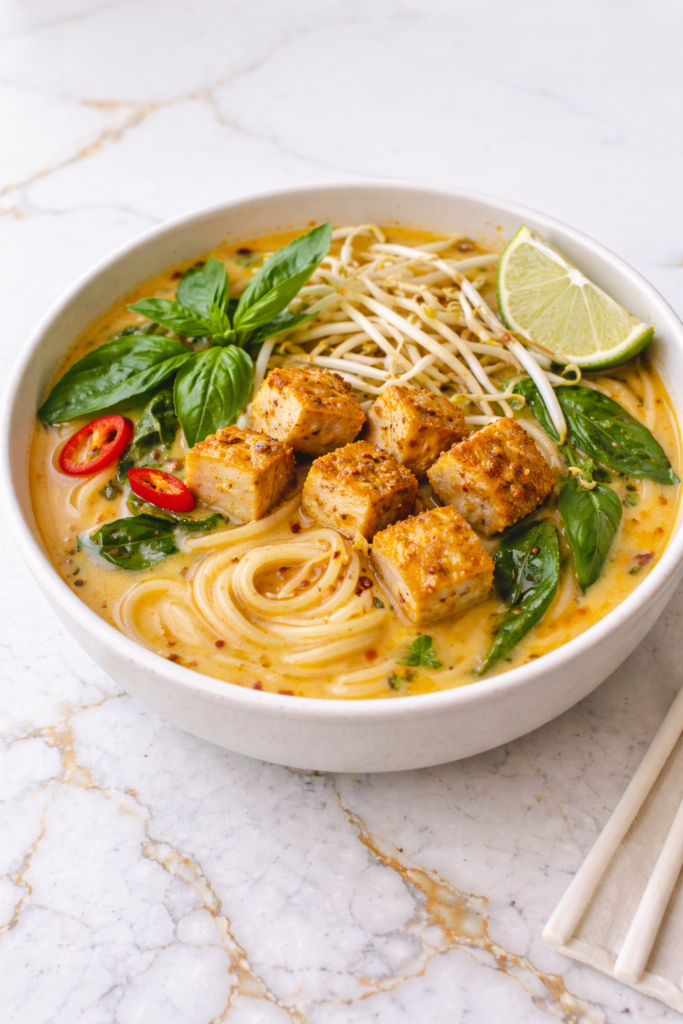
I started making this soup on cold evenings when I wanted something that felt warming and a little exotic without requiring a long list of hard to find ingredients.
Coconut milk and curry paste come together into a broth that is rich, fragrant, and just complex enough to feel special. Noodles make it filling and the whole thing comes together in one pot faster than most weeknight dinners.
I’ll show you how to build the broth so the flavors have real depth and how to balance the heat and creaminess so nothing overpowers the other. It’s the kind of soup that becomes a regular once you make it the first time.

Why You’ll Love This Recipe
Coconut curry noodle soup delivers bold, comforting flavors while still feeling light and nourishing. The creamy coconut broth is perfectly balanced with warm curry spices, creating a dish that’s both rich and refreshing at the same time.
This recipe is also incredibly adaptable, allowing you to adjust the spice level, protein, and vegetables based on your family’s preferences. Whether you keep it mild for kids or add extra heat for adults, it’s easy to make it your own.
Another reason this soup stands out is how quickly it comes together with simple pantry ingredients. It’s a reliable go-to meal that feels homemade and satisfying without requiring hours in the kitchen.
Serves: 4 people
This recipe serves four people comfortably as a main dish, with generous portions that are both filling and balanced. If you’re serving it alongside appetizers or sides, it can easily stretch to feed more.
Ingredients You’ll Need
For the soup base:
- 1 tablespoon olive oil
- 1 small onion, finely chopped
- 3 cloves garlic, minced
- 1 tablespoon fresh ginger, grated
- 2 tablespoons red curry paste
- 4 cups chicken or vegetable broth
- 1 can (13.5 oz) coconut milk
For the soup:
- 6 ounces rice noodles or egg noodles
- 1 cup shredded cooked chicken or tofu
- 1 cup sliced bell peppers
- 1 cup shredded carrots
- 1 cup baby spinach
- 1 tablespoon soy sauce
- 1 tablespoon lime juice
Optional toppings:
- Fresh cilantro
- Sliced green onions
- Lime wedges
- Chili flakes
- Crushed peanuts
Pro Tips
Use full-fat coconut milk for the best creamy texture and flavor. It creates a richer broth that balances beautifully with the spices.
Cook the noodles separately if you plan to have leftovers, as this prevents them from becoming overly soft in the broth. This small step helps maintain the perfect texture when reheating.
Adjust the curry paste to your preferred spice level by starting with less and adding more as needed. This is especially helpful when cooking for kids or mixed spice preferences.
Slice vegetables evenly so they cook at the same rate and maintain a pleasant texture. This ensures every spoonful has a balanced bite.
Add lime juice at the end of cooking to brighten the flavors without overpowering the dish. A fresh squeeze makes a noticeable difference.
Prepare all ingredients before starting to cook, as this recipe comes together quickly once the broth begins simmering. Having everything ready makes the process smooth and stress-free.
Tools You’ll Need
- Large pot or Dutch oven
- Wooden spoon or spatula
- Knife
- Cutting board
- Measuring cups and spoons
- Ladle
- Small pot (for noodles, optional)
Substitutions and Variations
You can easily make this soup vegetarian by using vegetable broth and tofu instead of chicken. It still delivers plenty of flavor and remains hearty and satisfying.
For a gluten-free option, use rice noodles and ensure your soy sauce is gluten-free or substitute with tamari. This keeps the dish accessible without sacrificing taste.
Swap the protein with shrimp, thinly sliced beef, or even chickpeas for a different twist. Each option brings its own unique flavor while complementing the curry base.
If you prefer extra vegetables, try adding mushrooms, zucchini, or snap peas. These additions enhance both texture and nutrition without complicating the recipe.
For a spicier version, add chili paste or fresh sliced chilies to the broth. This gives the soup a deeper heat that spice lovers will enjoy.
Make Ahead Tips
Coconut curry noodle soup is a wonderful option for prepping ahead, especially if you want a quick and comforting meal ready during the week. You can prepare the broth base up to three days in advance and store it in an airtight container in the refrigerator until you’re ready to reheat and serve.
For best results, cook and store the noodles separately to prevent them from absorbing too much liquid and becoming overly soft. When ready to serve, simply reheat the broth, cook or warm the noodles, and combine everything just before serving.
You can also chop all vegetables and prepare your protein ahead of time to streamline the cooking process. Keeping ingredients ready to go makes this recipe feel effortless, even on your busiest days.
Instructions
Step 1: Sauté the Aromatics
Heat olive oil in a large pot over medium heat. Add the chopped onion and cook for 3–4 minutes until softened and slightly translucent.
Stir in the garlic and grated ginger, cooking for another minute until fragrant. This step builds a flavorful base that sets the tone for the entire soup.
Step 2: Add the Curry Paste
Add the red curry paste to the pot and stir it into the aromatics. Let it cook for about 1–2 minutes to deepen the flavor and release its oils.
This step enhances the richness of the curry and ensures it blends smoothly into the broth. Stir constantly to prevent sticking or burning.
Step 3: Build the Broth
Pour in the broth and coconut milk, stirring well to combine everything evenly. Bring the mixture to a gentle simmer over medium heat.
Allow it to cook for 8–10 minutes so the flavors can meld together. The broth should become slightly thickened and aromatic.
Step 4: Add Vegetables and Protein
Add the sliced bell peppers, shredded carrots, and your choice of chicken or tofu to the simmering broth. Let everything cook for 5–7 minutes until the vegetables are tender but still vibrant.
Stir occasionally to ensure even cooking and to prevent anything from sticking to the bottom. This step brings texture and heartiness to the soup.
Step 5: Cook the Noodles
While the soup is simmering, cook the noodles according to the package instructions in a separate pot if desired. Drain and set aside once they are tender.
Keeping noodles separate helps maintain their texture and prevents them from becoming too soft in the broth. This is especially helpful for leftovers.
Step 6: Finish and Assemble
Stir the soy sauce and lime juice into the soup just before serving. Taste and adjust seasoning as needed to balance saltiness and acidity.
Add the baby spinach and let it wilt gently in the hot broth. To serve, place noodles in bowls and ladle the soup over the top, then finish with your favorite toppings.
Serving Suggestions
This coconut curry noodle soup is delicious served as a complete meal on its own, offering a balance of protein, vegetables, and comforting broth. The combination of textures and flavors makes it satisfying without needing much else alongside it.
For a more complete spread, serve it with fresh spring rolls or a light cucumber salad to add a refreshing contrast. These sides complement the richness of the soup without overwhelming it.
You can also pair it with warm flatbread or crusty bread for dipping into the flavorful broth. This is especially enjoyable for family-style meals where everyone gathers around the table.
If serving guests, set out a variety of toppings so each person can customize their bowl. This adds an interactive element and makes the meal feel extra special.
Leftovers and Storage
Leftover coconut curry noodle soup stores well when the components are kept separate. Store the broth, noodles, and toppings in individual airtight containers in the refrigerator for up to three days.
When reheating, warm the broth gently on the stove over medium heat until hot but not boiling. Add fresh or reheated noodles just before serving to maintain the best texture.
If the broth thickens during storage, you can add a splash of broth or water to loosen it back to your desired consistency. Stir well to bring everything back together.
Freezing is best done with the broth only, without noodles or fresh vegetables like spinach. This helps preserve both flavor and texture when thawed and reheated later.
Nutrition and Benefits
- Coconut milk provides healthy fats that help create a satisfying and ენერგizing meal while supporting fullness.
- The variety of vegetables adds fiber, vitamins, and antioxidants that contribute to overall wellness.
- Ginger and garlic are known for their anti-inflammatory properties and digestive support.
- This soup can be easily adapted to suit different dietary needs, including vegetarian and gluten-free options.
- The balanced combination of protein, carbohydrates, and fats makes it a nourishing and complete meal.
Recipe FAQ
Can I make this soup vegetarian or vegan?
Yes, this recipe is very easy to adapt for vegetarian or vegan diets. Simply use vegetable broth and replace chicken with tofu or additional vegetables. The flavors remain rich and satisfying without any animal products.
How spicy is this soup?
The spice level depends on the curry paste you use and how much you add. You can start with a smaller amount and increase it to suit your taste. This flexibility makes it easy to adjust for both kids and adults.
What type of noodles work best?
Rice noodles are a popular choice for their light texture and ability to absorb the broth’s flavor. Egg noodles also work well if you prefer a slightly heartier bite. Either option complements the soup beautifully.
Can I freeze this soup?
Yes, but it’s best to freeze only the broth without the noodles or delicate greens. Store it in an airtight container for up to one month. When ready to use, thaw and add freshly cooked noodles and vegetables.
How do I prevent the noodles from getting soggy?
Cooking and storing the noodles separately is the best way to avoid sogginess. Add them to the soup just before serving for the ideal texture. This also helps maintain quality in leftovers.
Can I add more protein?
Absolutely, you can add shrimp, beef, or even extra tofu to increase the protein content. Adjust cooking times accordingly to ensure everything is properly cooked. This makes the soup even more filling.
What can I use instead of coconut milk?
If you prefer, you can substitute coconut milk with a mixture of cream and broth, though the flavor will be different. Coconut milk gives the soup its signature taste and richness. For best results, it’s recommended to keep it in the recipe.
Conclusion
Coconut curry noodle soup is a comforting and dependable recipe that brings warmth and flavor to any table.
It’s easy to prepare, flexible for different preferences, and delivers consistent results that make it perfect for family meals.
With its rich broth, tender noodles, and vibrant ingredients, it’s a dish that feels both nourishing and satisfying.
It’s a recipe worth returning to again and again for its simplicity, versatility, and comforting appeal.