I made this salad for the first time when I was looking for something creamy and a little unexpected that worked as a light lunch without any cooking.
Hearts of palm have a tender, mild texture that takes on a curry dressing really well and gives the salad a satisfying bite that feels more substantial than a typical vegetable salad.
The curry adds warmth and depth without making it heavy or overpowering. I’ll show you how to build the dressing so the flavors are balanced and how to put the whole thing together in just a few minutes. It’s a fresh, interesting salad that earns a regular spot in any weekly lunch rotation.
Why You’ll Love This Recipe
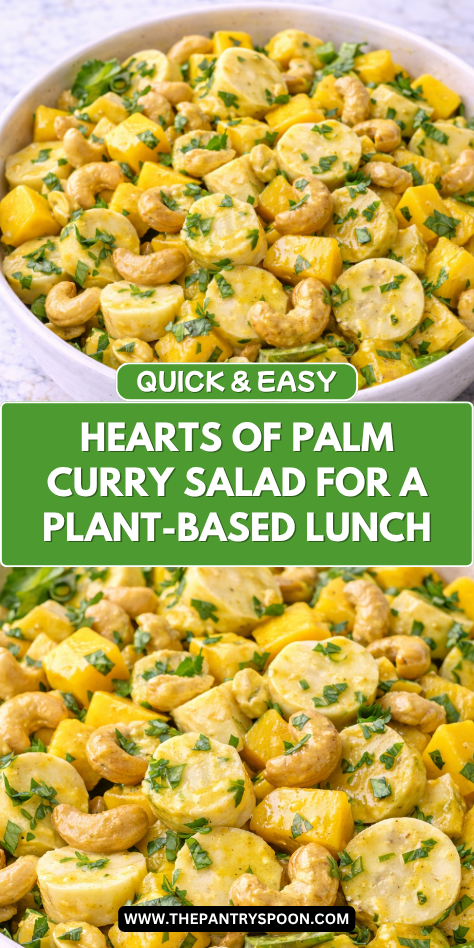
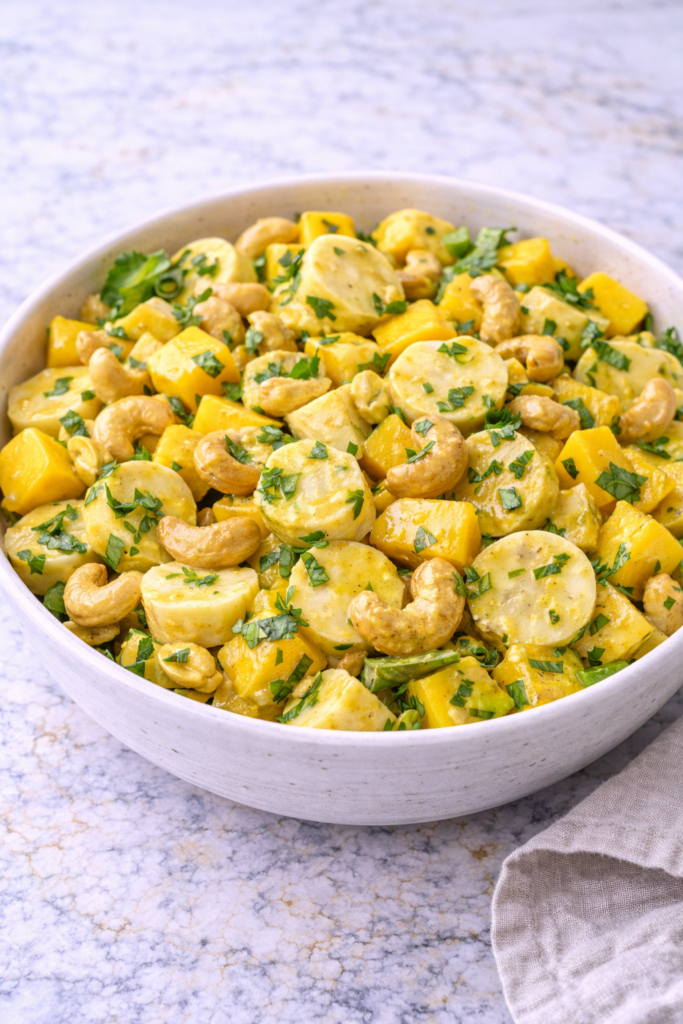
This Hearts of Palm Curry Salad is a wonderful blend of creamy, tangy, and gently spiced flavors that work beautifully together. The mild, tender texture of the hearts of palm absorbs the curry dressing perfectly, creating a dish that feels both unique and approachable.
It’s also incredibly easy to prepare, requiring minimal cooking and simple steps that fit easily into a busy day. Whether you’re making lunch for yourself or preparing a side dish for the family, this recipe comes together quickly without sacrificing flavor.
Another reason this salad stands out is its versatility. It can be served as a light main dish, a flavorful side, or even tucked into wraps or sandwiches, making it a flexible option that adapts to different meals and occasions.
Serves: 4 people
This recipe serves four as a light main or a generous side dish. You can easily double the ingredients for larger gatherings or adjust portion sizes depending on how you plan to serve it.
Ingredients You’ll Need
For the salad:
- 2 cans (14 oz each) hearts of palm, drained and sliced into rounds
- 1 cup celery, finely chopped
- ½ cup red bell pepper, diced
- ¼ cup red onion, finely chopped
- ¼ cup fresh parsley, chopped
For the curry dressing:
- ½ cup mayonnaise
- ¼ cup plain Greek yogurt
- 1 tablespoon curry powder
- 1 teaspoon Dijon mustard
- 1 tablespoon lemon juice (freshly squeezed)
- 1 teaspoon honey
- ½ teaspoon salt
- ¼ teaspoon black pepper
Optional add-ins:
- ¼ cup raisins or dried cranberries
- ¼ cup chopped cashews or almonds
- ½ teaspoon turmeric for extra color and flavor
Pro Tips
Drain the hearts of palm thoroughly and pat them dry before slicing. Removing excess moisture helps the dressing cling better and prevents the salad from becoming watery.
Slice the hearts of palm into even, bite-sized pieces to ensure a consistent texture throughout. This makes the salad easier to eat and helps distribute the dressing evenly.
Let the salad chill for at least 30 minutes before serving to allow the flavors to meld. This simple step enhances the overall taste and gives the curry dressing time to develop.
Adjust the curry powder to suit your taste preference. Some blends are stronger than others, so start with less and add more if you want a deeper flavor.
If adding dried fruit or nuts, mix them in just before serving for the best texture. This keeps them from becoming too soft or losing their crunch.
Taste and adjust the seasoning before serving, especially the balance of lemon juice and salt. A small adjustment can brighten the entire dish.
Tools You’ll Need
- Mixing bowls
- Cutting board
- Sharp knife
- Measuring cups and spoons
- Spatula or spoon for mixing
- Colander for draining
Substitutions and Variations
If you don’t have hearts of palm, you can substitute with chopped artichoke hearts or even cooked chickpeas for a different texture. While the flavor will vary slightly, both options work well with the curry dressing.
For a lighter version, you can replace the mayonnaise with additional Greek yogurt. This keeps the dressing creamy while reducing richness and adding a bit more tang.
To make the salad vegan, use a plant-based mayonnaise and dairy-free yogurt alternative. The result will still be flavorful and satisfying with the same creamy consistency.
You can also experiment with additional vegetables like shredded carrots or chopped cucumber for extra crunch. These additions bring more freshness and color without complicating the recipe.
For a slightly sweeter profile, increase the honey or add a bit more dried fruit. This variation pairs especially well if you’re serving the salad as part of a larger spread.
Make Ahead Tips
This Hearts of Palm Curry Salad is an excellent option for making ahead, as the flavors continue to develop over time. Preparing it a few hours in advance or even the night before allows the curry dressing to fully infuse into the ingredients, resulting in a more cohesive and flavorful dish.
Store the salad in an airtight container in the refrigerator until ready to serve. If you’re including add-ins like nuts or dried fruit, consider adding them just before serving to maintain their texture and prevent them from becoming too soft.
If you prefer a slightly fresher texture, you can prep the dressing and chopped vegetables ahead of time and combine everything shortly before serving. This gives you flexibility while still saving time during busy days.
Instructions
Step 1: Prepare the Hearts of Palm
Drain the canned hearts of palm thoroughly in a colander. Pat them dry gently with a paper towel to remove excess moisture, then slice them into even, bite-sized rounds.
Place the sliced hearts of palm into a large mixing bowl. Ensuring they are well-drained helps the dressing adhere properly and keeps the salad from becoming watery.
Step 2: Chop the Vegetables
Finely chop the celery, dice the red bell pepper, and mince the red onion. Aim for uniform pieces so that each bite of the salad has a balanced combination of flavors and textures.
Add the chopped vegetables to the bowl with the hearts of palm. Sprinkle in the fresh parsley and gently toss to combine.
Step 3: Make the Curry Dressing
In a separate bowl, whisk together the mayonnaise, Greek yogurt, curry powder, Dijon mustard, lemon juice, honey, salt, and black pepper. Mix until the dressing is smooth and creamy with a consistent color.
Taste the dressing and adjust the seasoning if needed. You can add a bit more lemon juice for brightness or a touch more curry powder for deeper flavor.
Step 4: Combine the Salad
Pour the curry dressing over the hearts of palm and vegetable mixture. Use a spatula or large spoon to gently fold everything together until evenly coated.
Be careful not to overmix, as you want to keep the hearts of palm intact. The goal is a well-coated salad with a light, creamy consistency.
Step 5: Add Optional Ingredients
If using raisins, dried cranberries, or chopped nuts, fold them into the salad at this stage. These additions provide a pleasant contrast of texture and a hint of sweetness.
Mix gently to distribute evenly without breaking down the main ingredients. This step adds an extra layer of interest to the final dish.
Step 6: Chill the Salad
Cover the bowl and place the salad in the refrigerator for at least 30 minutes. This allows the flavors to meld together and enhances the overall taste.
For best results, let it chill for up to 2 hours if time allows. The salad will become more flavorful as it rests.
Step 7: Serve and Enjoy
Remove the salad from the refrigerator and give it a gentle stir before serving. Taste and adjust seasoning if needed, adding a pinch of salt or a squeeze of lemon juice.
Serve chilled as a light main dish or a flavorful side. Garnish with additional parsley if desired for a fresh finish.
Serving Suggestions
This salad is wonderful served chilled on its own as a light and refreshing meal. Its creamy texture and gentle spice make it satisfying without feeling heavy.
It also pairs beautifully with grilled proteins such as chicken, fish, or tofu, creating a balanced and complete plate. The curry flavors complement smoky or simply seasoned dishes very well.
For a more casual option, you can spoon the salad into wraps or pita pockets. This turns it into a convenient and portable meal that works well for lunches or picnics.
Serving it over a bed of mixed greens adds extra volume and freshness. This variation makes it feel more like a traditional salad while still highlighting the curry flavors.
You can also include it as part of a larger spread with other salads and small dishes. Its unique flavor profile makes it stand out and adds variety to the table.
Leftovers and Storage
Store any leftover Hearts of Palm Curry Salad in an airtight container in the refrigerator. It will stay fresh for up to three days while maintaining its flavor and texture.
Before serving leftovers, give the salad a quick stir to redistribute the dressing. You may also want to add a small squeeze of lemon juice to refresh the flavors.
If the salad appears slightly watery after storage, simply drain off any excess liquid or stir it back in gently. This can happen naturally as the ingredients release moisture over time.
Avoid freezing this salad, as the creamy dressing and fresh vegetables do not hold up well to freezing and thawing. The texture may become unpleasant once defrosted.
For best quality, store any crunchy add-ins like nuts separately and mix them in just before serving. This helps maintain their texture and prevents them from softening.
Nutrition and Benefits
- Hearts of palm are low in calories while providing a good source of fiber, making this salad a light yet satisfying option. They also contain essential minerals such as potassium and iron.
- The inclusion of fresh vegetables like celery and bell peppers adds vitamins, antioxidants, and a natural crunch. These ingredients contribute to overall health while enhancing flavor.
- Greek yogurt in the dressing offers protein and probiotics, supporting digestion and adding a creamy texture. It’s a nutritious alternative to using only mayonnaise.
- Curry powder contains a blend of spices that may offer anti-inflammatory benefits. It also brings depth and warmth to the dish without the need for heavy ingredients.
- This salad can be easily adapted to meet various dietary needs, including vegetarian and gluten-free preferences. Its flexibility makes it a wholesome option for a wide range of households.
Recipe FAQ
What do hearts of palm taste like?
Hearts of palm have a mild, slightly nutty flavor with a tender texture similar to artichokes. They absorb surrounding flavors very well, making them ideal for dishes like this curry salad. Their subtle taste allows the dressing to shine.
Can I make this salad vegan?
Yes, you can easily make this recipe vegan by using plant-based mayonnaise and dairy-free yogurt. The texture and flavor will remain creamy and satisfying. It’s a simple swap that doesn’t require any major adjustments.
How long should I chill the salad?
Chilling the salad for at least 30 minutes is recommended to allow the flavors to develop. If you have more time, letting it sit for up to 2 hours enhances the taste even further. The longer it rests, the more cohesive the flavors become.
Can I use fresh hearts of palm?
Fresh hearts of palm can be used if available, though they are less common than canned versions. Be sure to slice them thinly and handle them gently. The preparation process remains the same.
What can I use instead of curry powder?
If you don’t have curry powder, you can create a simple blend using turmeric, cumin, coriander, and a pinch of paprika. This will mimic the warm, spiced flavor profile. Adjust the amounts to suit your taste.
Is this salad suitable for meal prep?
Yes, this salad is great for meal prep because it stores well and maintains its flavor over a few days. Keeping add-ins separate until serving helps preserve texture. It’s a convenient option for quick lunches.
Can I add protein to this salad?
You can add protein such as grilled chicken, chickpeas, or tofu to make it more filling. These additions pair well with the curry dressing and turn the salad into a more complete meal. It’s a flexible way to customize the dish.
Conclusion
This Hearts of Palm Curry Salad is a simple, flavorful recipe that brings together creamy textures and warm spices with very little effort. It’s easy to prepare, adaptable, and perfect for both everyday meals and special occasions.
With its fresh ingredients and dependable results, it’s a dish you can return to whenever you want something light yet satisfying. It offers a comforting balance of flavor and ease that makes it worth making again.