I started making this soup when I wanted something hearty and nourishing that could carry me through a busy week without a lot of daily cooking.
Quinoa and chickpeas together give it real staying power, and the noodles make it feel comforting in the way a good soup should.
The broth is where all the work happens, and I’ll show you how to build it so it has depth and warmth rather than tasting flat.
It comes together in one pot and keeps well in the fridge for days, which makes it one of my most practical cold weather recipes. It’s simple, filling, and the kind of thing that gets better every time you reheat it.
Why You’ll Love This Recipe
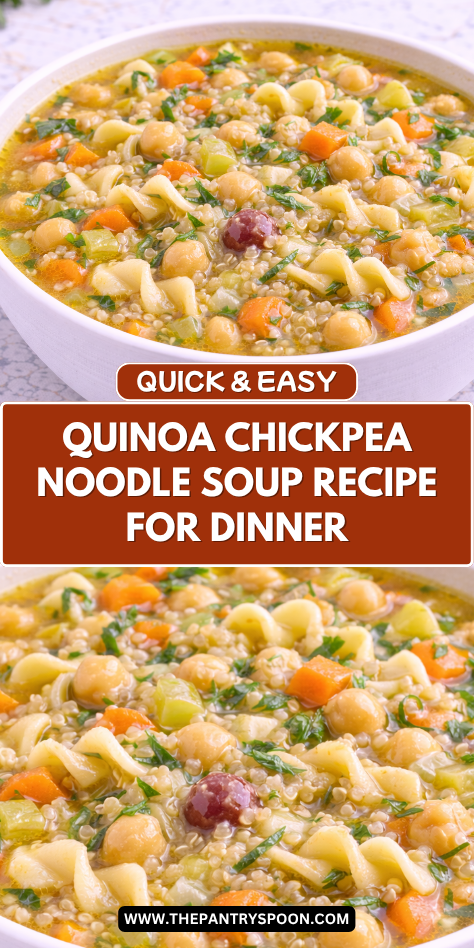
This quinoa chickpea noodle soup is the perfect blend of comfort and nutrition, offering a hearty texture without feeling too heavy. The combination of quinoa and chickpeas provides a satisfying base, while the vegetables and broth keep it light and flavorful.
It’s also a simple, one-pot recipe that comes together with minimal effort, making it ideal for busy weeknights. With just a bit of chopping and simmering, you can have a homemade meal ready in no time.
Another reason this recipe stands out is its versatility and family-friendly appeal. You can easily adjust the ingredients based on what you have on hand, making it a reliable option for everyday cooking.
Serves: 4 people
This recipe serves four people comfortably as a main dish, with generous portions that are both filling and balanced. You can easily double the recipe if you’re cooking for a larger group or planning leftovers.
Ingredients You’ll Need
- 1 tablespoon olive oil
- 1 small onion, finely chopped
- 2 cloves garlic, minced
- 2 carrots, sliced
- 2 celery stalks, chopped
- 1 teaspoon dried thyme
- 1/2 teaspoon dried oregano
- 6 cups vegetable broth
- 1/2 cup quinoa, rinsed
- 1 can (15 oz) chickpeas, drained and rinsed
- 1 cup egg noodles or small pasta
- 1 cup spinach or kale
- 1 tablespoon lemon juice
- 1/2 teaspoon salt (or to taste)
- 1/4 teaspoon black pepper
Pro Tips
Rinse the quinoa thoroughly before adding it to the soup to remove any bitterness. This helps improve both flavor and texture.
Sauté the onions, garlic, carrots, and celery until softened to build a strong flavor base. This step adds depth to the broth.
Cook the noodles separately if you plan to store leftovers, as they can absorb too much liquid and become soft. This keeps the soup’s texture balanced.
Add leafy greens like spinach at the end of cooking to preserve their color and freshness. They only need a few minutes to wilt.
Adjust seasoning at the end, especially after adding lemon juice, to ensure the flavors are balanced. A small adjustment can make a big difference.
For a thicker soup, let it simmer a bit longer so the quinoa releases starch and slightly thickens the broth. This creates a heartier consistency.
Tools You’ll Need
- Large pot or Dutch oven
- Wooden spoon or spatula
- Knife
- Cutting board
- Measuring cups and spoons
- Ladle
Substitutions and Variations
You can substitute chickpeas with white beans or lentils for a slightly different texture and flavor. Each option still keeps the soup hearty and satisfying.
For a gluten-free version, use gluten-free pasta or omit the noodles altogether and add extra quinoa. This maintains the soup’s structure while accommodating dietary needs.
Add additional vegetables like zucchini, bell peppers, or mushrooms for more variety and nutrition. These ingredients blend well with the existing flavors.
If you prefer a richer broth, you can add a splash of coconut milk or a drizzle of olive oil before serving. This enhances the overall depth of flavor.
For a spicier version, include a pinch of red pepper flakes or a dash of hot sauce. This adds warmth without overpowering the soup.
Make Ahead Tips
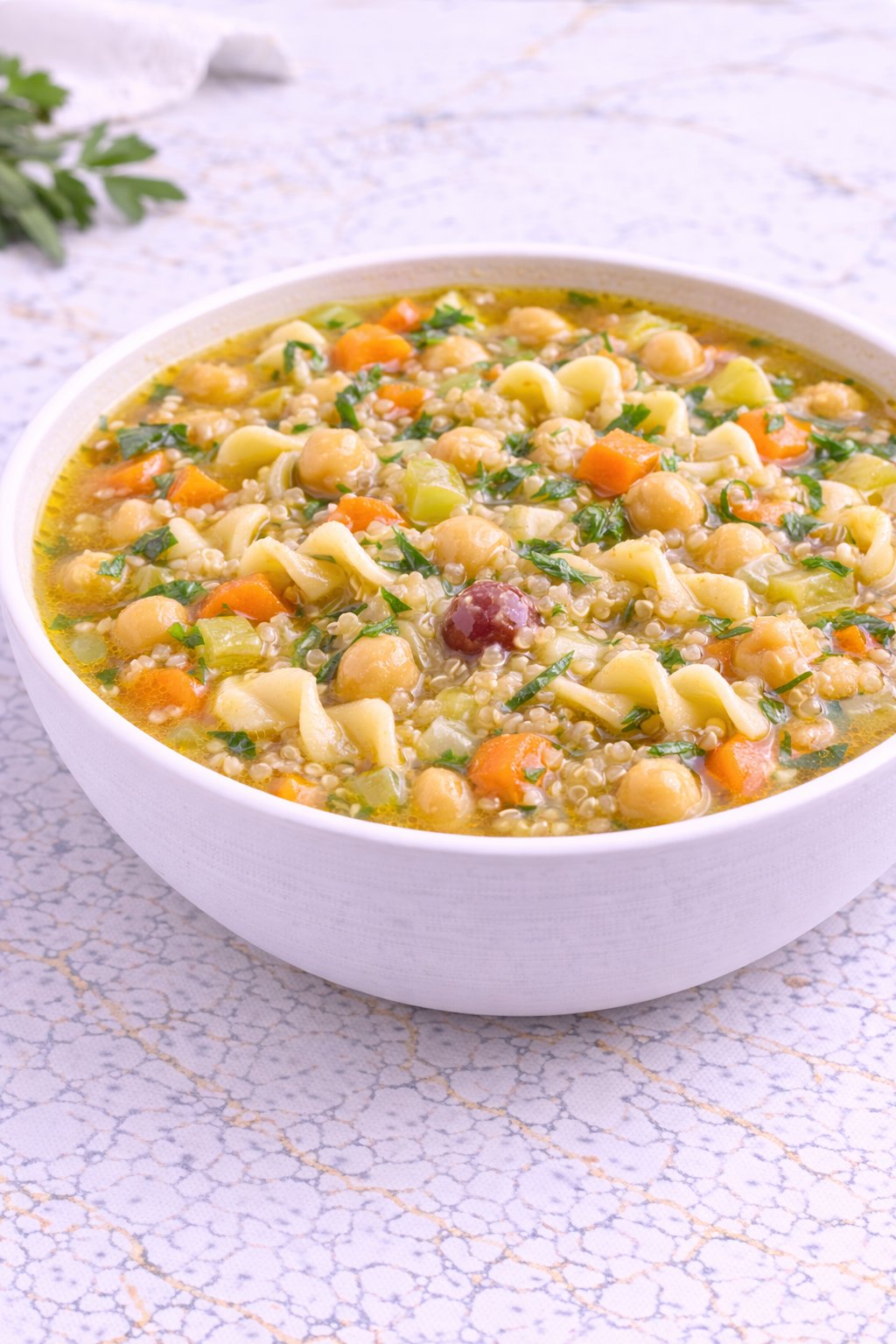
Quinoa chickpea noodle soup is an excellent option for making ahead, especially when you want a nourishing meal ready to go during the week. You can prepare the soup base, including the vegetables, broth, quinoa, and chickpeas, up to three days in advance and store it in the refrigerator.
For the best texture, cook the noodles separately and add them just before serving. This prevents them from becoming overly soft and absorbing too much of the broth during storage.
If you’re planning to freeze the soup, do so without the noodles and leafy greens. Add those fresh when reheating to maintain the best flavor and texture.
Instructions
Step 1: Sauté the Vegetables
Heat the olive oil in a large pot over medium heat. Add the chopped onion, carrots, and celery, and cook for 5–6 minutes until softened.
Stir in the minced garlic, dried thyme, and oregano, cooking for another minute until fragrant. This step builds a flavorful base for the soup.
Step 2: Add the Broth and Quinoa
Pour in the vegetable broth and bring the mixture to a gentle boil. Stir in the rinsed quinoa and reduce the heat to a simmer.
Let it cook for about 10–12 minutes, allowing the quinoa to soften and begin to expand. This adds heartiness and texture to the soup.
Step 3: Add the Chickpeas
Stir in the drained and rinsed chickpeas, mixing well with the broth and quinoa. Continue to simmer for another 5 minutes to allow the flavors to blend.
The chickpeas add protein and make the soup more filling. Stir occasionally to ensure even cooking.
Step 4: Cook the Noodles
In a separate pot, cook the noodles according to package instructions until just tender. Drain and set aside.
Cooking the noodles separately helps maintain their texture and prevents them from becoming too soft in the soup.
Step 5: Add Greens and Seasoning
Stir the spinach or kale into the soup and let it wilt for 2–3 minutes. Add the cooked noodles, lemon juice, salt, and black pepper.
Taste the soup and adjust seasoning as needed. The lemon juice adds brightness and balances the flavors.
Step 6: Simmer and Serve
Allow the soup to simmer for an additional 2–3 minutes to bring everything together. Remove from heat once the flavors are well combined.
Ladle into bowls and serve warm. The result is a comforting, hearty soup with a balanced texture and flavor.
Serving Suggestions
Quinoa chickpea noodle soup is a complete meal on its own, offering a satisfying balance of protein, grains, and vegetables. It’s perfect for cozy dinners when you want something warm and nourishing without needing additional sides.
For a more complete spread, serve it with a slice of crusty bread or a simple side salad. The bread is especially helpful for soaking up the flavorful broth.
You can also top each bowl with a drizzle of olive oil or a sprinkle of fresh herbs for added depth. These small touches elevate the presentation and flavor.
For family-style meals, serve the soup in a large pot at the table and let everyone help themselves. This creates a warm and inviting dining experience.
Leftovers and Storage
Store leftover quinoa chickpea noodle soup in an airtight container in the refrigerator for up to four days. Keeping it sealed helps maintain both freshness and flavor.
If the soup thickens during storage, add a splash of broth or water when reheating to reach your desired consistency. Stir gently to combine.
Reheat on the stove over medium heat or in the microwave until warmed through. Avoid boiling, as this can overcook the ingredients.
For freezing, store the soup without noodles in a freezer-safe container for up to one month. Add freshly cooked noodles and greens when reheating for best results.
Nutrition and Benefits
- Quinoa provides a complete source of plant-based protein, making the soup more filling and nutritious.
- Chickpeas add fiber and additional protein, supporting digestion and sustained energy.
- Vegetables like carrots, celery, and greens contribute essential vitamins and minerals.
- This recipe is naturally vegetarian and can be easily adapted for different dietary needs.
- The combination of ingredients creates a balanced, wholesome meal that supports overall wellness.
Recipe FAQ
Can I make this soup gluten-free?
Yes, you can make this soup gluten-free by using gluten-free noodles or omitting them entirely. Adding extra quinoa is a great alternative. The soup remains hearty and satisfying.
Do I have to cook the noodles separately?
Cooking the noodles separately is recommended, especially if you plan to store leftovers. It prevents them from becoming too soft and absorbing too much broth. You can cook them directly in the soup if serving immediately.
Can I use canned quinoa?
Quinoa is typically used dry and cooked in the soup, so canned quinoa is not common. If you have pre-cooked quinoa, you can add it later in the cooking process. Adjust cooking time accordingly.
How can I make the soup more flavorful?
You can enhance flavor by adding fresh herbs, a splash of lemon juice, or a pinch of spices like cumin or paprika. Sautéing the vegetables well at the beginning also adds depth. Taste and adjust as you go.
Can I add more protein?
Yes, you can add tofu, white beans, or even shredded chicken if you prefer. Each option increases the protein content while complementing the soup’s flavors. Adjust seasoning as needed.
Is this soup kid-friendly?
Yes, this soup is very family-friendly with its mild flavors and soft textures. You can adjust the seasoning or cut vegetables smaller for younger eaters. It’s a great way to include more nutritious ingredients.
Why did my soup become too thick?
The quinoa and noodles can absorb liquid over time, making the soup thicker. Simply add more broth or water when reheating to reach your desired consistency. Stir well to combine.
Conclusion
Quinoa chickpea noodle soup is a comforting and nourishing recipe that fits easily into everyday meals.
It’s simple to prepare, flexible for different preferences, and delivers consistent, satisfying results.
With its hearty ingredients and balanced flavors, it’s a dish the whole family can enjoy.
It’s one you’ll want to make again and again for its ease, warmth, and wholesome appeal.